Jeans - Page 6

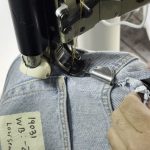
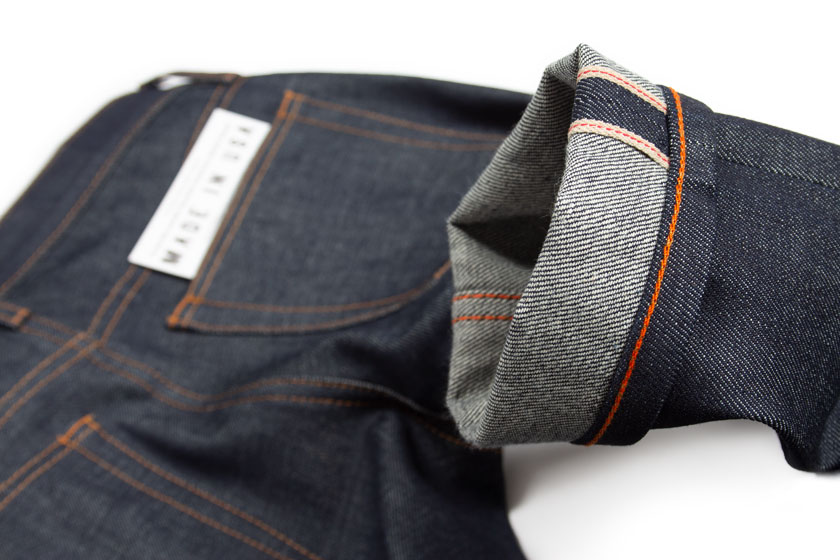
Hem of American-made raw denim selvedge jeans with orange chain stitch hemming shows what is aw denim, selvedge on jeans and chain stitching.
/

What’s the difference between raw denim and selvedge denim?

Here is everything you need to know without going into great detail about raw denim’s history or production. Raw denim fabric must first be understood in order to understand what raw jeans are.


Raw denim is simply denim fabric that has not been washed, dyed, soaked, or otherwise exposed to water.


Raw denim is simply denim that has not been washed, colored, soaked, or otherwise exposed to water after the weaving process. What makes denim “raw” has nothing to do with its color, weight, maker, dye, or the fact that it is selvedge or not.

Raw denim is also called dry or hard denim, but it shouldn’t be confused with selvedge denim, which it often is. In the image below, you can see examples of the two different types of raw denim fabric used to make denim clothing. The most common type of denim among denim enthusiasts is selvedge, which refers to the weaving process of the fabric. It has clean-self finished edges or โ€œself-edgeโ€ which are used in finished garments by cutting selected pattern parts to the edge of the fabric. Wide goods or non-selvedge denim (pictured in the foreground) is woven with frayed edges which are discarded after cutting.
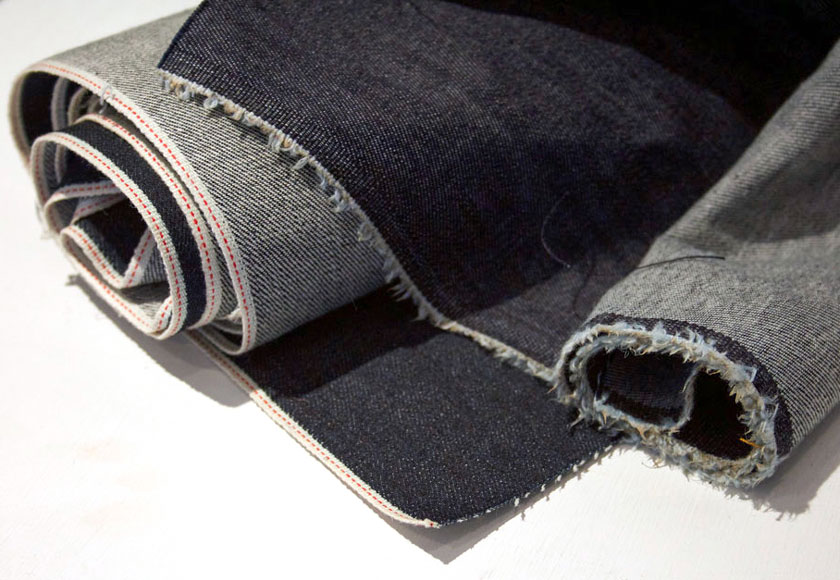
A close-up of selvedge and ordinary raw denim fabric to highlight the difference.
A close-up of selvedge (redline edge) and ordinary raw denim fabric to highlight the difference.

Is selvedge better quality denim?

Don’t be fooled by the name selvedge into believing it’s better denim. Quality standards, like other items, will vary depending on the provider. Both selvedge and non-selvedge denims are manufactured in varying grades. Frequently, mass producers of low-cost jeans use suppliers who are not known for producing high-quality denim. Do your homework since some mass-market brands will leverage the cache of mills recognized for creating premium denim to make cheap denim that looks the part.

Why is selvedge denim more expensive?


For fabric mills, weaving selvedge denim is more expensive. For brands, the cost of manufacturing garments produced with selvedge denim is higher. As a result, selvedge denim products typically sell at higher costs within a brand’s style assortment.
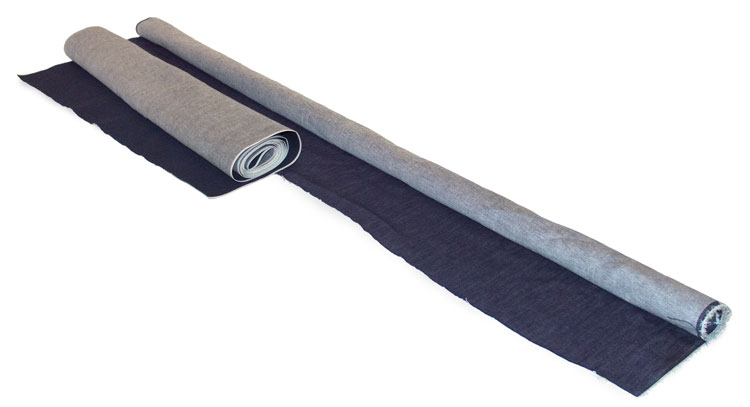

Rolls of selvedge denim and non-selvedge regular raw denim are side by side to compare raw denim vs selvedge.

Within a brand’s style range, selvedge denim jeans are more likely to be more expensive than non-selvedge models: To begin, unlike non-selvedge denim, which can range from 57″ to 64″ wide, selvedge denim is narrower, ranging from 28″ to 34″ in width. This means that a pair of selvedge jeans may require roughly double the amount of fabric as a regular pair of jeans. The pricing of the fabric is the second factor to consider. Selvedge costs a few dollars extra per yard (depending on the supplier) because it is typically woven on older, slower looms that create fabric with a high rate of flaws, whereas modern looms make wider (non-selvedge) denim with fewer faults at faster speeds.

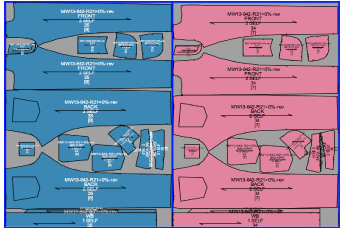
The images below show “Markers” for jeans. Markers are patterns for each size range that are printed on paper and used by the cutter to trace the cut on the fabric. The pattern pieces on the Markers are arranged to minimize fabric waste. Selvedge Markers are shown in the top image, and non-selvedge Markers are shown in the bottom image. This example shows two pairs of jeans cut on the narrower selvedge denim would require nearly 6 yards of fabric, while two of the same sizes cut on the wider non-selvedge would use about 2 1/2 yards of fabric.

A Mini Marker for cutting two sizes of selvedge jeans on narrow selvedge denim fabric
A Mini Marker for cutting two sizes of selvedge jeans
A Mini Marker for cutting two sizes of non-selvedge regular denim jeans on wide goods denim fabric.
A Mini Marker for cutting two sizes of non-selvedge regular denim jeans

/

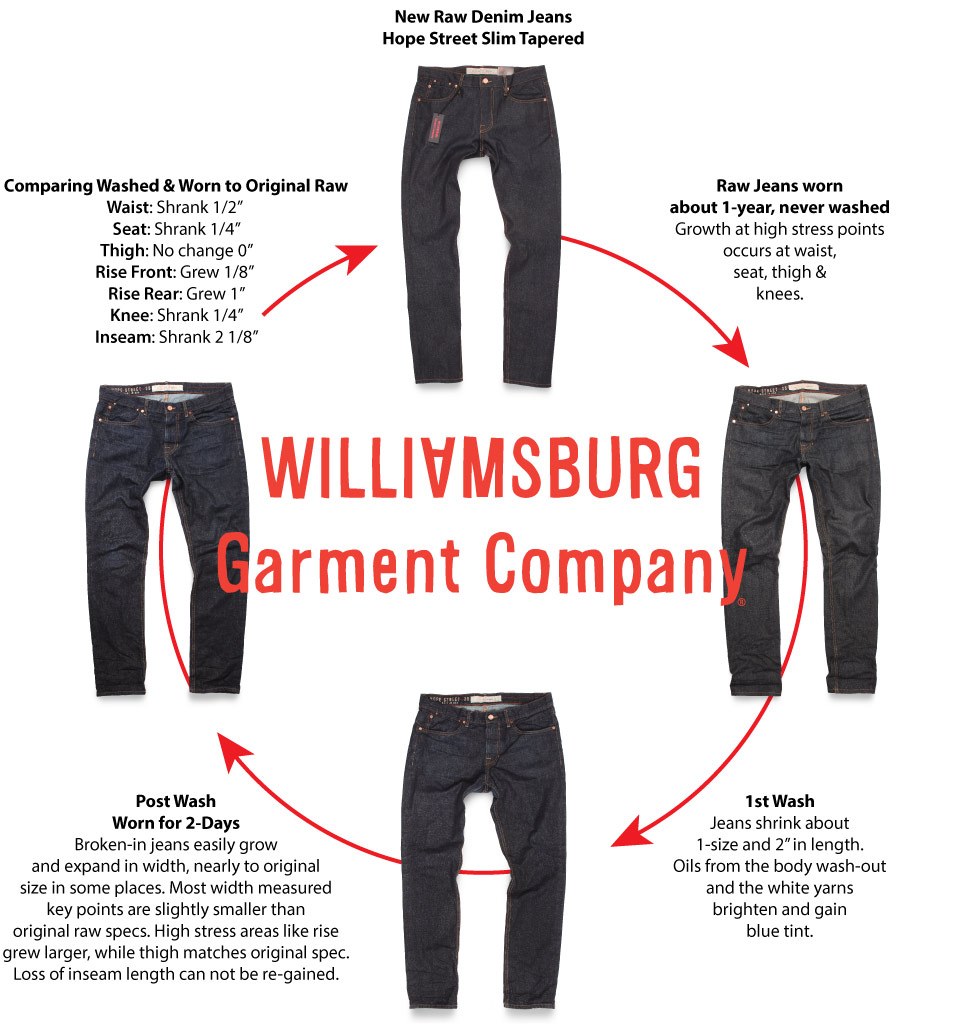
Stages of raw denim stretching and shrinking

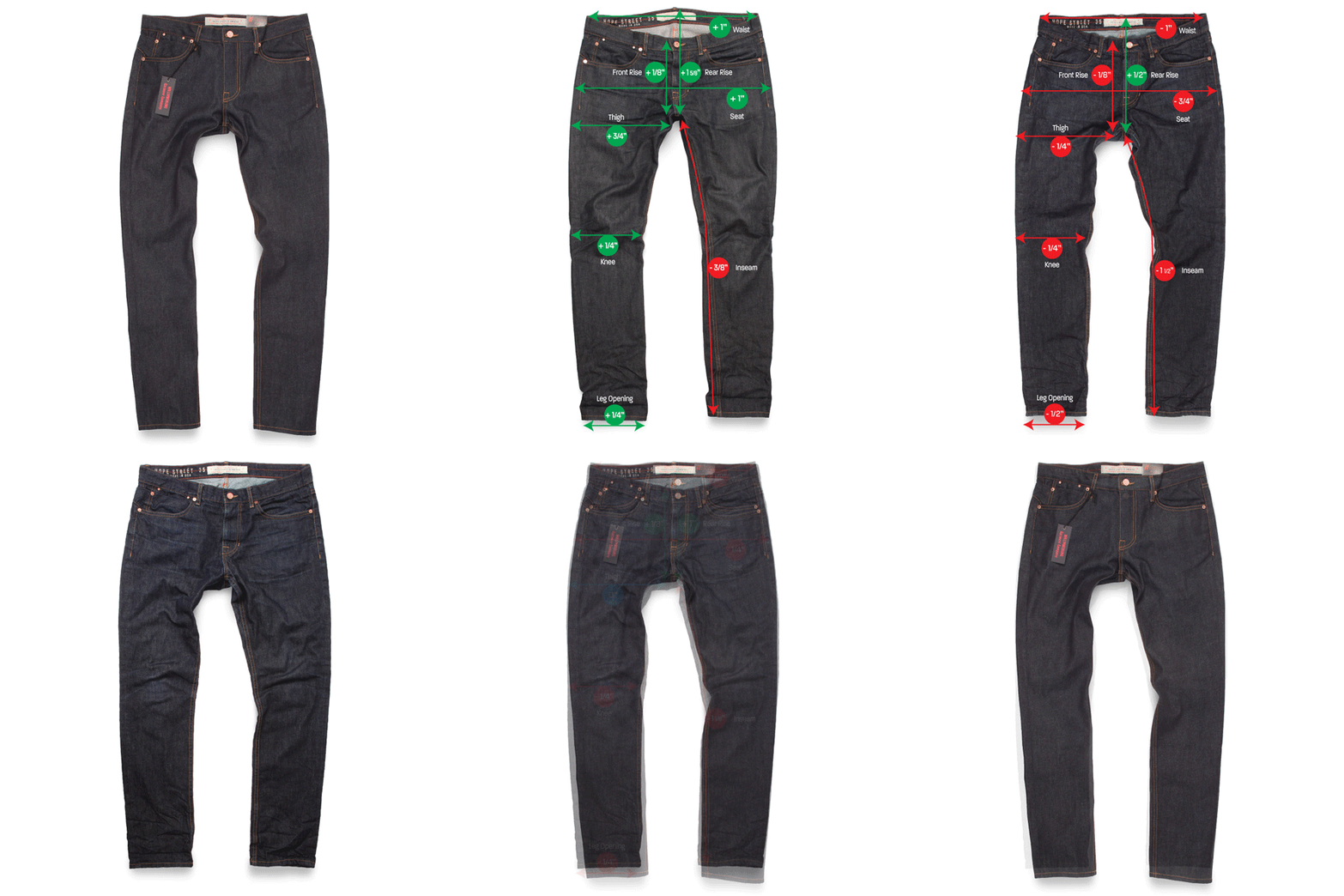
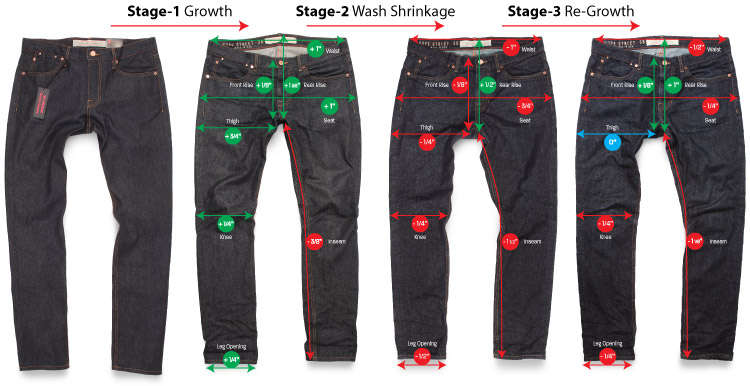
The noted changes in each stage are based on the measurement differences from the original unworn new jeans. For example, the waist growth from the unworn raw jeans in Stage-1 to the jeans that have been worn but never washed is +1″.

Stage 2, after the jeans have been worn for several months without a wash, they finally go through the pair’s first wash. The jeans are at their smallest point because they have not yet been worn again and seem to have lost at least a size. The waist now measures -1″ smaller than the original unworn new jeans at this point. Overall, that’s a 2″ difference between the waistband’s largest recorded size after the jeans were worn several months in the raw state and the first wash.

Photo of raw jeans explains How much stretching or shrinkage happens at the waistband, seat, rise, thighs, knees, inseam, and hem of jeans over time.
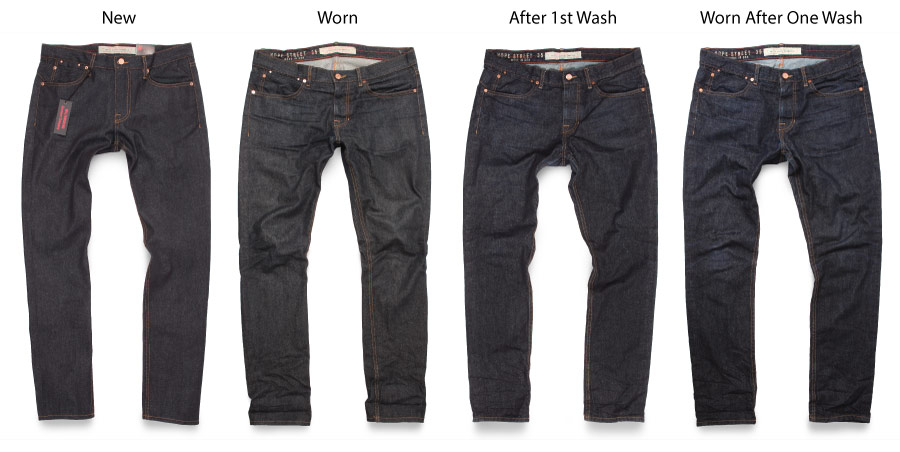
First jeans stretch. After washing, they shrink. Then they try to grow back to the stretched size.
4 jeans photos show the life cycle of raw jeans shrinkage and stretching reviewing the changes in measurements.

Faded jeans natural aging vs. factory manufactured wash
Naturally aged faded jeans vs. Factory manufactured wash
/

Denim fades explained: Natural vs. Manufactured

Mastering the rules that go along with owning a pair of raw denim jeans can be a chore to some. This is one reason some opt for pre-washed jeans. However, for raw denim aficionados, the rewards of naturally aging from a pair of raw jeans out weights the alternative.

Know the differences between naturally aged raw denim jeans and factory washed

People new to raw denim and those who love jeans, but only know them in the pre-washed form, often canโ€™t tell the difference between a naturally aged pair of raw denim jeans and one that is purchased pre-washed. However, if you fall into this category donโ€™t feel bad. You may be surprised to learn many of the people earning salaries as designers, editors, and denim buyers at some of the largest department stores, publications, and brands making the decisions on what jeans are sold, seen, and made, donโ€™t know the difference either. I canโ€™t tell you how many times one of the aforementioned asked about a pair of my raw denim jeans (new/unworn) and referred to them as a dark wash.

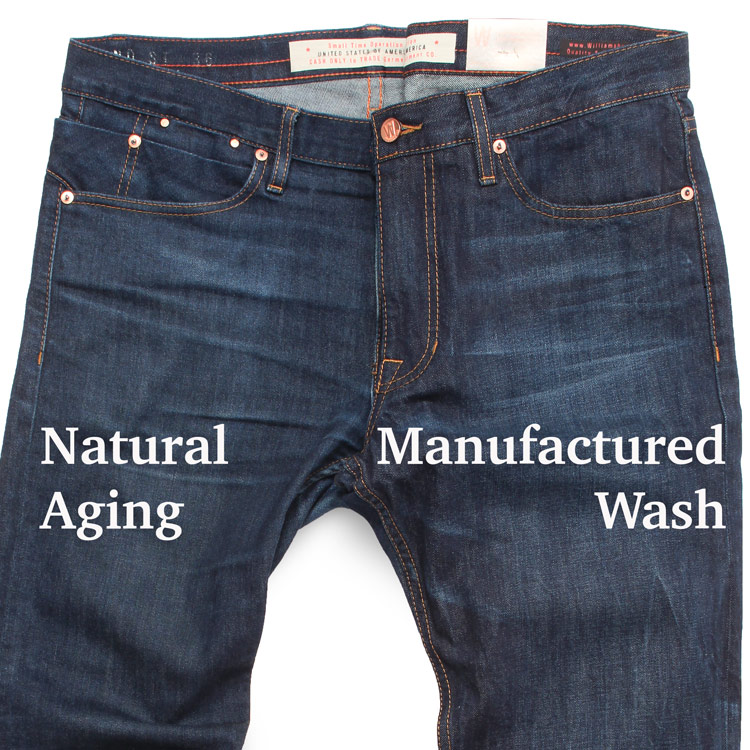
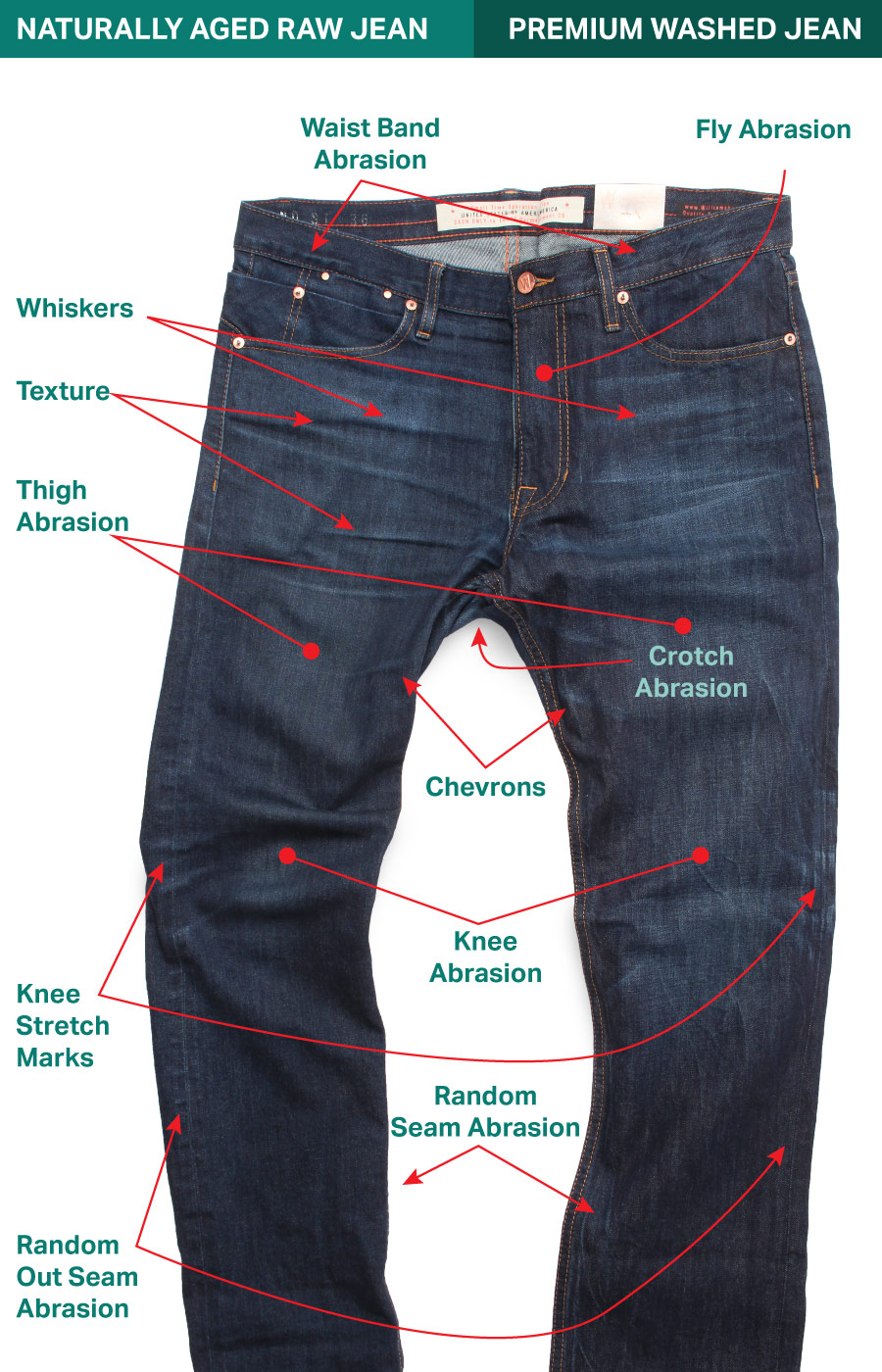
Below, I placed two jeans side by side to compare naturally aged jean which started as a pair of raw jeans and premium washed jean, which was designed to replicate dark-aged jean and then I detailed the attributes. Both are Williamsburg jeans. Although we take pride in trying to recreate really authentic-looking aged jeans, there is really just no substitute for the real thing. However, if you seek a worn, broken-in jeans and donโ€™t have the time or patience to weather a pair of raw, please opt for washed jeans with authentic-looking attributes and try to avoid washed jeans that were meant to look aged but look more like jeans decorated with harsh white spots and lines drawn on them.

Naturally faded raw jeans (left) manufactured jeans wash (right)

WHISKERS

Named for obvious reasons, whiskers are the most difficult to imitate and can be the defining detail that makes a wash look artificial or authentic. Real whiskers develop texture over time as the jeans tuck and fold in a repeated manner, with the highest point receiving more abrasion, removing more indigo, and the lower less fiction, which stays darker. High stress at the hip area causes the fabric to bend horizontally. In the early years of whisker reproduction, workers used clamps and tacks with resin to harden the texture in place, in an attempt to give jeans a realistic look. The drawback of making textured denim with resin is that it weakens the yarns. Too much resin on jeans may look good, but the fabric becomes brittle and easily tears. In about 2003, as I was seeking to create more authentic-looking whiskers, I created a new way to add texture and naturally shaped wrinkles to jeans, which is now used at factories all over the world. You can read more about that on the Maurice Malone website.

THIGH, KNEE, AND SEAT ABRASION

The second most important parts of a denim wash are the thigh and seat abrasion. In general, these areas usually take the most beating, along with the knees. In hand sanding, the factory worker usually starts out making the whiskers followed by the thigh, then seat sanding. Lower-quality washes often use sandblasting for speed. This is why with many low-priced and mass-market jeans, the aging at the thigh is bright white or looks like big spots. Sandblasting, although faster is harder to control in the manufacturing process. It also lays down an even amount of abrasion which doesnโ€™t look natural. These areas are finished off with potassium to quickly fade sanded areas. Again, in lower price jeans, the chemical is sprayed on, while some higher-priced manufacturing sometimes applies the potassium by brush for a more natural uneven effect.

CHEVRONS

Chevrons are stretch marks on the inner thighs. They are usually more intense higher in the crotch and fade out closer toward the knees.

KNEE STRETCH MARKS

One of the characteristics routinely avoided in premium washes, but always seen on naturally aged jeans is stretch marks created by the stress of bending the knees. These marks usually extend over the outer seams and fade into the wrinkles at the rear side of the knees. 

REAR KNEE LINES

Not pictured, but sometimes added to washed jeans are the honeycomb-like texture that forms at the rear side of the knees from walking and the sitting position. Wash factories tend to overdo effects more often than not and this feature is not so easy to replicate, so most of the time, the rear knees are either avoided or badly done. The worst example of this is the look of lines drawn at the rear sides of the knees, usually with the placement low on the calf.

WAISTBAND ABRASION

Most often, this wearing away is seen on menโ€™s jeans from the friction caused by wearing a belt.

FLY ABRASION

Fly abrasion can take many forms, depending if the jeans have a button or zipper fly. It also depends on how loose or tight the fit of the jeans is. When you see whiskers across the fly, it is affected by the stress from the hips and this usually occurs with button fly.

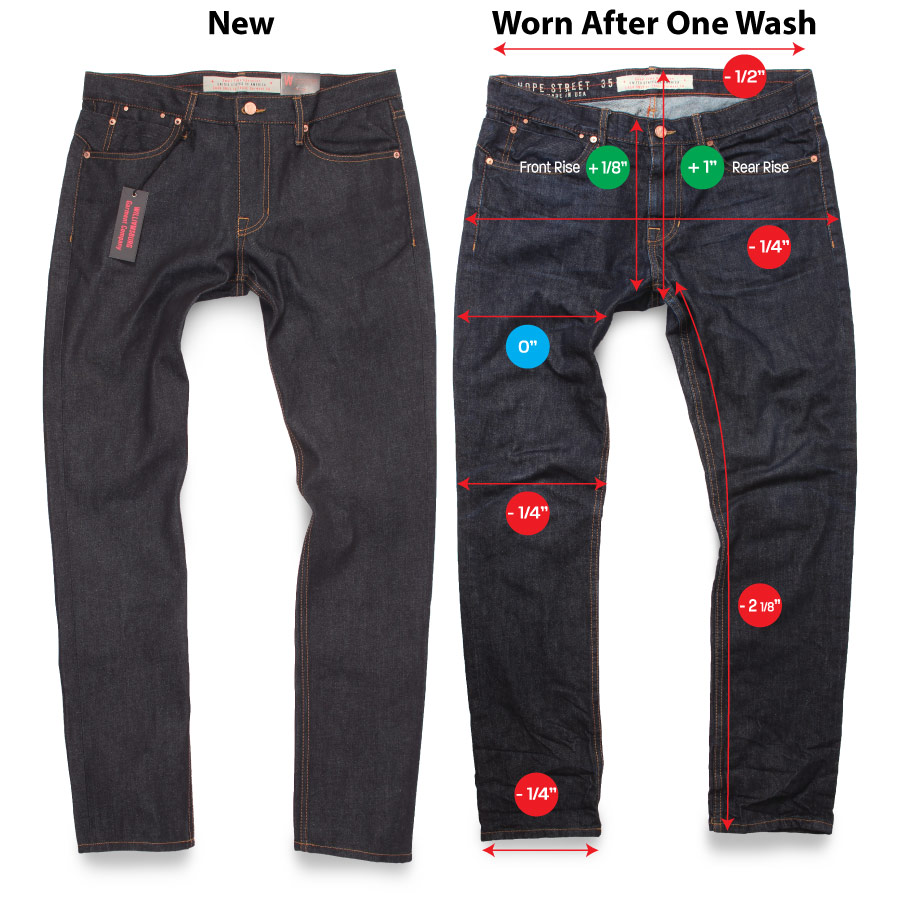
Guide showing raw denim jeans shrinkage and stretching measurements
Raw denim jeans shrinkage & stretching measurements
/

Raw Denim Evaluation of Stretching & Shrinkage

Hope Street questions answered: How much does raw denim shrink and stretch?

American-made Hope Street raw denim fading and aging reviewed
New unworn raw denim compared to worn and later washed jeans

Starting with a fresh new pair of menโ€™s raw denim Hope Street jeans, I recorded measurements of my size 35 jeans. The jeans were worn on average about two days per week for about a year.

One thing I noticed about my Hope Street jeans is they remained very dark even after a year plus of wearing causally and beating them up pretty well in the warehouse. I asked Blake, my sales rep from Cone Denim about this and he told me the denim used in the Hope Street jeans was their darkest pure indigo shade. He went on to say, โ€œitโ€™s 40% pure. That shade is engineered to give the best possible range of shade.โ€ This means that once you do manage to wear the denim down, the multitude of aging tones in the indigo will be beautiful.

Working from the Williamsburg denim store every day, I found myself educating people on things like, โ€œwhat are selvedge jeans?โ€ Washed vs. raw jeans and how much does raw denim shrink and stretch. The expansion experienced while wearing raw denim jeans and the shrinkage that occurs after washing has been the most challenging conversations. To aid and give visuals to the discussion, I made it my goal to personally begin testing every style of Williamsburg jeans for denim shrinkage and growth. Starting with measurements taken from jeans while new and raw, to the point where they grow after months of wear and ending with recording after-wash measurements, followed by after-wash/after-wear measurements.

Below, are the measurements from Hope Street, non-stretch, standard raw denim jeans before wear. Followed by the measurements of the jeans after washing and then wearing them for 2 days โ€“ stretching and growing the jeans to a size that ends up being slightly smaller jeans than they were in the beginning. 

New: Size 35

Waist Band: 39โ€

Seat: 43 ยพโ€

Front Rise: 10 ยพโ€

Rear Rise: 15โ€

Thigh: 26โ€

Knee: 17 ยผโ€

Hem: 14 ยฝโ€

Inseam: 35

Washed & Worn: Size 35

Waist Band: 38 ยฝโ€

Seat: 43 ยฝโ€

Front Rise: 10 ยฝโ€

Rear Rise: 16โ€

Thigh: 26โ€

Knee: 17โ€

Hem: 14 ยผโ€

Inseam: 32 7/8โ€

In high-stress areas like the waistband, seat, and knees, the denim shrunk a good amount after the first wash. However, after a short time of wear, the fabric expanded relatively with ease. At the rise and thigh, the areas that stretch the most, the changes canceled each other out, growing a great deal while raw, then shrinking and enlarging again shortly after wash and wear. The inseam which sees very little growth during the break-in process is only really affected by shrinkage and loses about 2 inches.

Guide shows how much raw denim jeans stretch and grow.
Raw denim guide answers the question, "How much does raw denim stretch?"
/

How much does raw denim stretch?

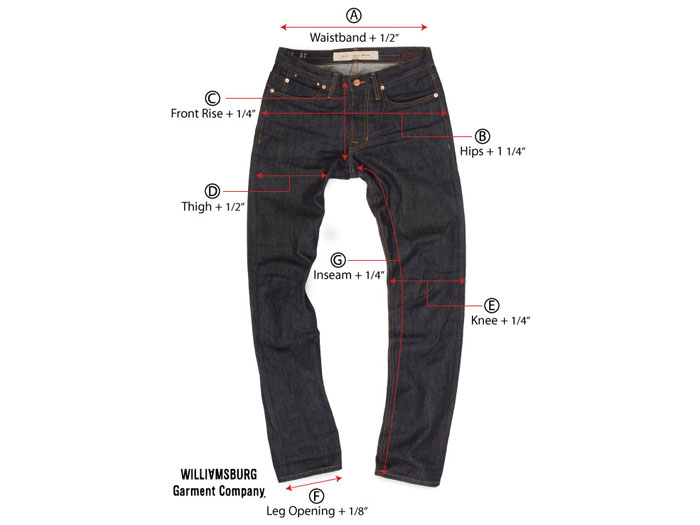
We decided to create this quick guide to answer a common question about breaking in raw denim jeans. One of the most common questions for those looking to buy a pair of raw jeans for the first time is โ€œ How much does raw denim stretch?โ€

We took measurements from a customer’s jeans after he had worn them for about 2 months and then compared them to the original measurements of the jeans. Here is what we found.

  • A. The waistband grew 1/2″ (total circumference)
  • B. The hips grew 1 1/4″ (total circumference)
  • C. The front rise grew 1/4″
  • D. The thigh grew 1/2″ (total circumference)
  • E. The knee grew 1/4″ (total circumference)
  • F. The leg opening grew 1/8″ (total circumference)
  • G. The inseam grew 1/4″

To answer wash and shrinkage questions, earlier experiments of the raw denim jeans in these styles show the shrink rate at 3.5% in width and 2.5% in length.

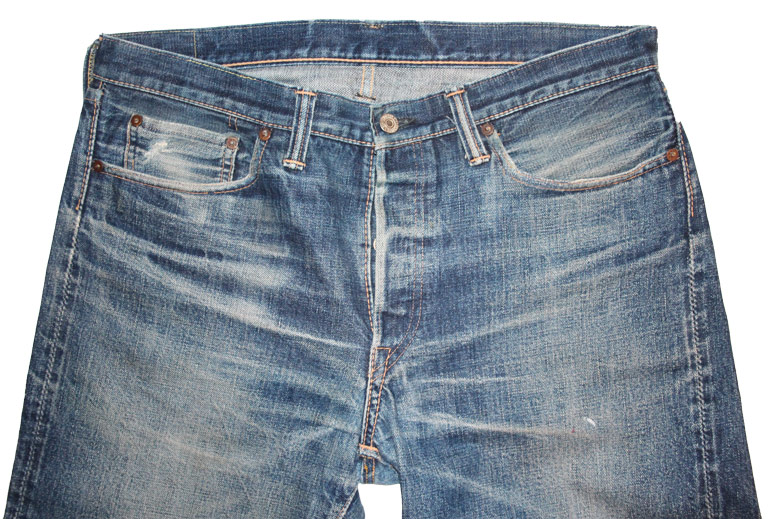
Close-up of naturally faded vintage Levi's jeans with whiskers at hips and extending from crotch
A pair of old naturally faded Levi's jeans with whiskers, also known as mustaches or hige.

What are whiskers on jeans? How are they made naturally and commercially?

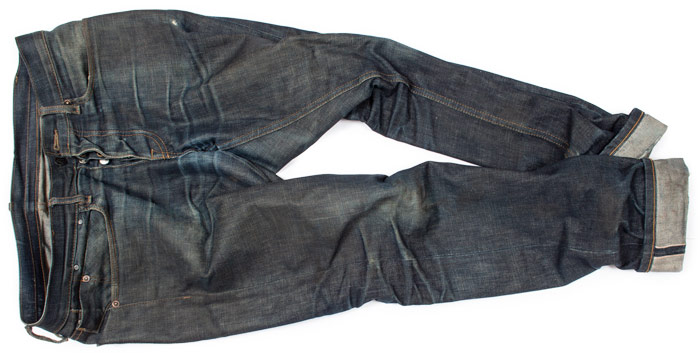
Denim enthusiasts know the best whiskers are made by starting with a pair of dark raw denim jeans and just wearing the hell out of them. An example can be seen in the image below of a 1-year-old 15-oz pair of Williamsburg jeans. On the other hand, the average consumer may be asking, “what are whiskers on jeans?” Because they only know the jeans they buy in stores come with a worn-in look and canโ€™t tell what looks natural and what looks manufactured.

If you donโ€™t have the patience to break-in a pair of raw jeans or canโ€™t deal with the rules of wearing them โ€“ choosing rather buy pre-washed ones. You should at minimum be educated on what looks real or good in terms of washes. This is the first article in a new series where we break down many of the effects seen in naturally aged denim jeans. We will explain how the effects are created to make prefabricated washes look naturally aged.

What are jean whiskers?

Whiskers, also called mustaches, hige, crease lines, etc., can be seen on the jeans below, which formed naturally from the state of raw denim jeans. Lines from repeated stretching and pulling motion develop at the front hip area. Crease lines extend out from the crotch and across the out-seams of the hips. As raw jeans age. Abrasion on the high points of the surface fades and becomes brighter than the surrounding areas as indigo or dye rubs off.

How to put whiskers on jeans

On pre-washed or commercially processed jeans, fabricating whiskers is one of the most copied and difficult effects to achieve. They are artificially created by hand sanding the jeans before they are washed and still in โ€œraw denimโ€ form. On lower-priced jeans, the effect usually looks fake, like drawn white lines. On jeans that garner higher price tags, sometimes known as premium denim, more time and effort is spent to make the whiskers look as real as possible by fading them in and out, mimicking high to low points.

1 4 5 6 7