Denim - Page 5

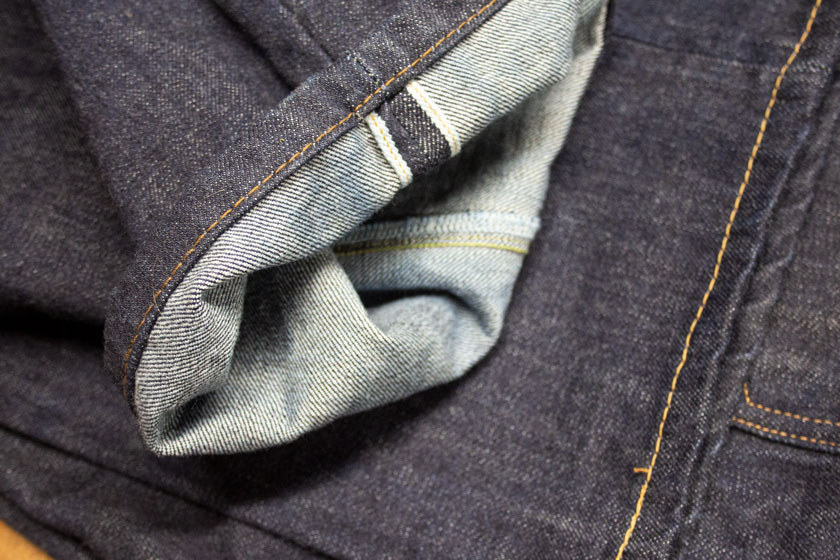
Pure Blue Japan jeans with shortened inseam shows what is jeans hemming
Hemmed Syoaia Pure Blue Japan jeans
/

What is Jeans Hemming Explained

Summary

Jeans hemming is the process of shortening the leg or inseam length of a pair of jeans by removing some of the fabric from the bottom.

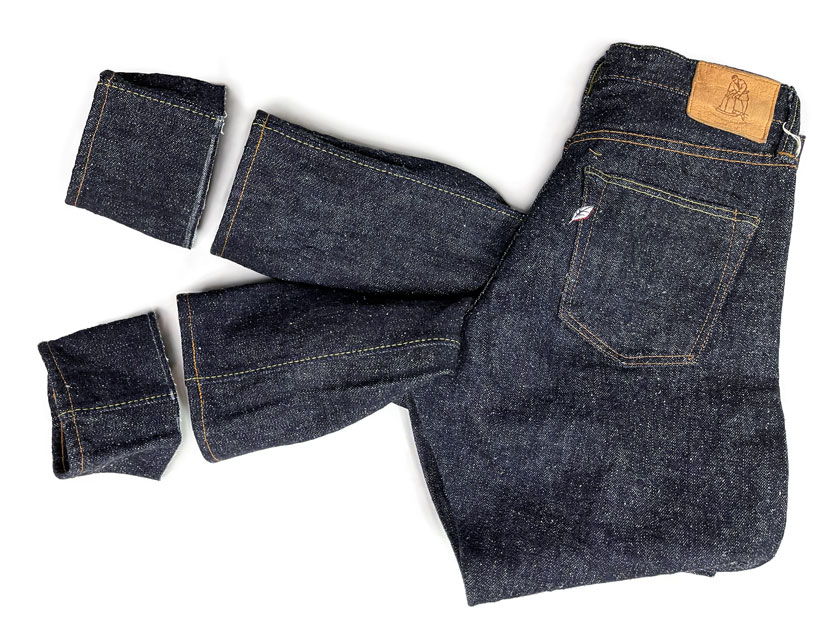
These photographs demonstrate the before and after effects of hemming alterations made by Williamsburg Garment Company to shorten the inseam of jeans to demonstrate “what jeans hemming is.” The top photograph features a pair of Pure Blue Japan jeans. It displays the altered inseam and leg openings as well as the portions of the hem that was removed.

The below image displays a pair of raw denim jeans with their original hem and full inseam length. A chalk line on the jeans marks the hemming cut line, which also includes a 1/2-inch double fold (1-inch).
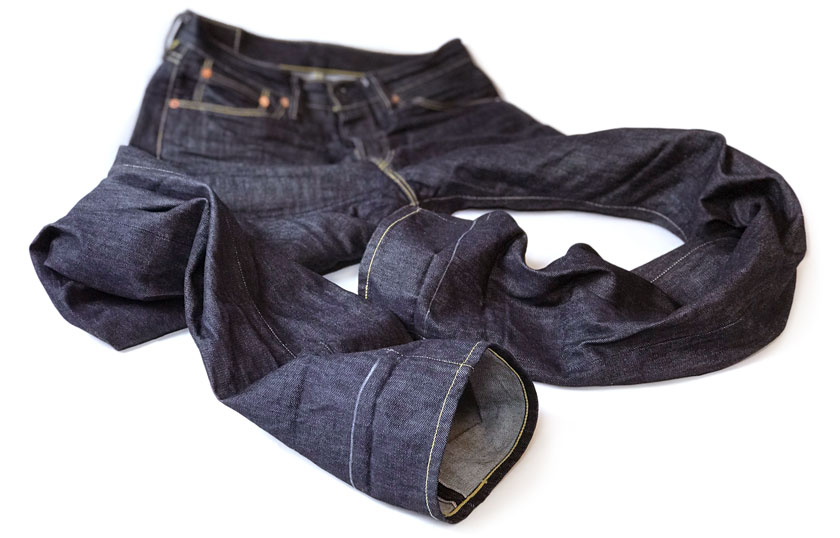
A pair of raw denim LeRoy Strauss jeans are shown at their original length, and a chalk line marks the hemming cut line.
A pair of raw denim jeans with yellow chainstitch inside the hem are marked with a chalk line which represents the cut line.

The majority of jeans are sewn with chain-stitched hemming. The average hem measures roughly 1/2 inch tall. A tailor or seamstress double folds the raw edge after cutting to the hem (leg opening). Since each fold measures approximately 1/2 inch, the inseam length must be increased by 1 inch to reach the desired length.

To see what we mean by double folding, and the process of hemming in action. Watch our video “Chain Stitch Hemming in 87 Seconds.”

Chain Stitch Hemming in 87 Seconds
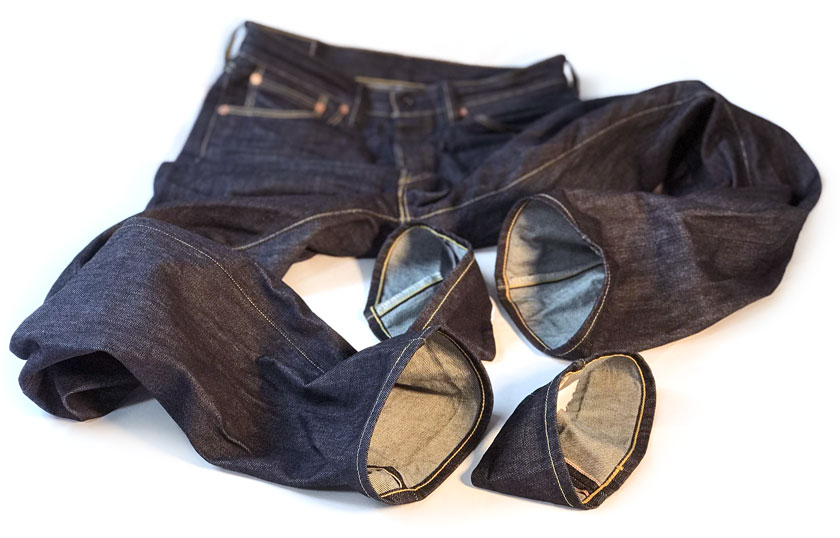
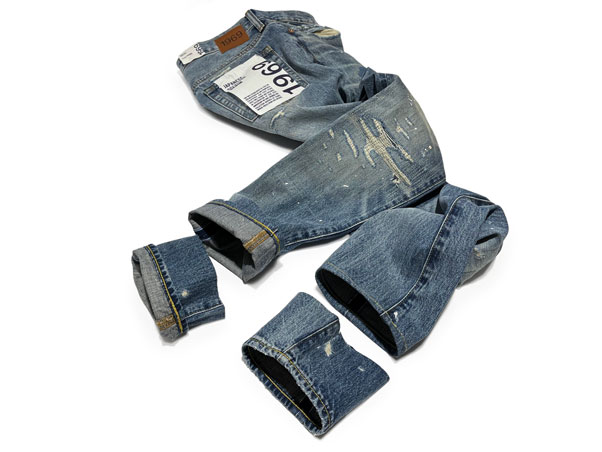
Photo shows hemmed selvedge raw denim jeans with yellow chain stitching and cut-off fabric parts after alterations.
Hemmed (shortened) jeans with yellow chain stitching are shown after being altered and having the original hem removed.
Chainstitch denim hemming alterations on Gap 1969 jeans
Chainstitch denim hemming on Gap 1969 jeans with alterations service by Williamsburg Garment Company.
/

Tips for Professionally Hemming Your Denim: The Simple, Affordable Way

So you splurged on that vintage-looking pair of Gap 1969 jeans. They are everything you were looking for, but about 4-to-5-inches too long. Now what? You donโ€™t want to wear them rolled with a huge cuff โ€“ or even have them stacking over your shoes. You want to make them one of your go-to jeans, so you need them to fit right. Hereโ€™s how you can make that happen: With fast professional chainstitch denim hemming service that’s available from any city or town in the USA! We make our alterations services simple and both affordable and easy to execute. Read on to learn how we can help you achieve the perfect fit:

What is a Chainstitch Hem?

A chainstitch hem is a technique used in most jeans. Itโ€™s a fairly common and durable stitch that is found on most jeans. As seen on the above pair of Gap 1969 jeans, youโ€™ll want to ensure when shortening your inseam, the jeans have the same style of sewing as the original store-bought jeans. That’s with chain stitching and thick, heavy threads. Both are not options not usually found at local tailors, cleaners, and even department stores or a brand’s in-store alterations services. Read more on chainstitch hemming on our blog.

How to order Hemming from us

We receive and ship altered jeans, pants, and shirts from all over the USA. Sometimes, those seeking the very best denim services will ship us garments from other countries. We offer low-cost 2-way shipping options, so you can ship 1 or multiple items in an order for the same low price. With 2-way shipping, we email you a shipping within a few hours of placing your order, or the next morning when ordering after business hours.

Additional Rush Alterations Options to Consider

We offer RUSH and STANDARD SERVICE. The fastest is Same-Day while you wait. The next fastest is 1-Day Service. Our regular service takes about 5-to-7 days. Pricing for all services is listed on the ordering page.

The Catch-22 of Denim Hemming

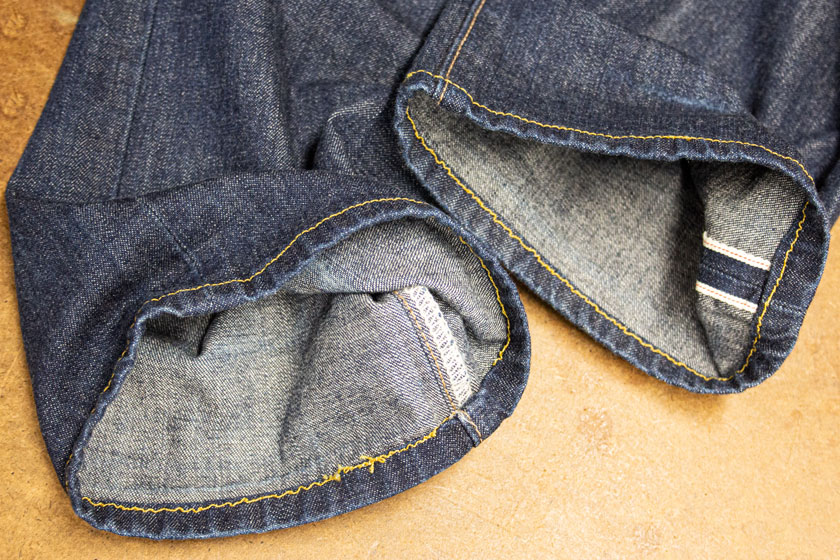
Unfortunately, there are DIY techniques and non-professional denim tailors who offer what’s called an Original Hem alteration. They say you can retain the original pre-washed edge on the leg opening, but they don’t tell how bad your jeans will look on the inside or how you will lose the flexibility of the hem.

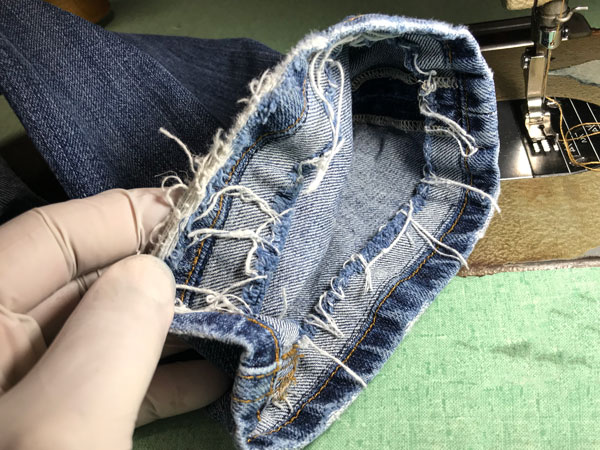
Inside sewing details of original hem alteration
Example of one of the Original Hem alterations sewing techniques

Final Words

Original hems are a bad idea. Don’t let anyone talk you into this style of alteration. We get lots of jeans sent to us with requests to undo this alteration and re-hem the jeans correctly with chain stitching.

The pre-washed edge on the leg opening, as seen on the section cut from Gap 1969 jeans comes back in time with washing and wearing. If you want to speed up the process, you can rough up the hem with sandpaper, a sharp blade, or an electric grinder for the shredded look. For fast fading, wet and wrinkle the hem, then rub in a small amount of bleach on the high points, and dip the hem in cold water to halt the fading. Machine wash the jeans after.

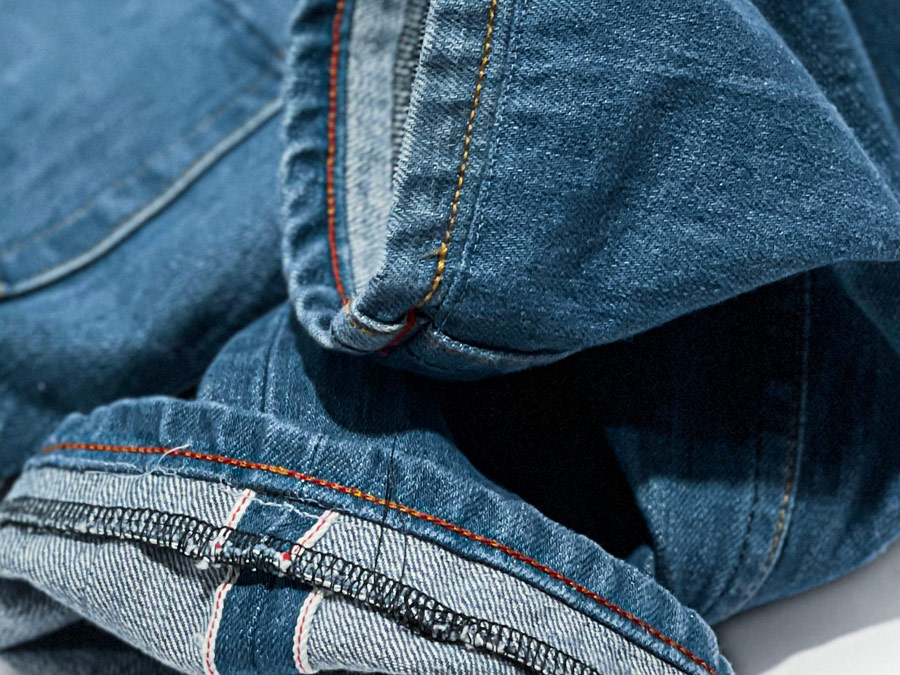
Close-up of sewing details on an Original Hem alteration
/

What is an Original Hem alteration?

An original hem also called a European hem, or euro hem is an alteration method where the goal is to shorten jeans and pants without losing the original manufactured hem. This alteration technique is a perceived value on garments with pre-washed or aged hem edges to those who do not want to lose the look.

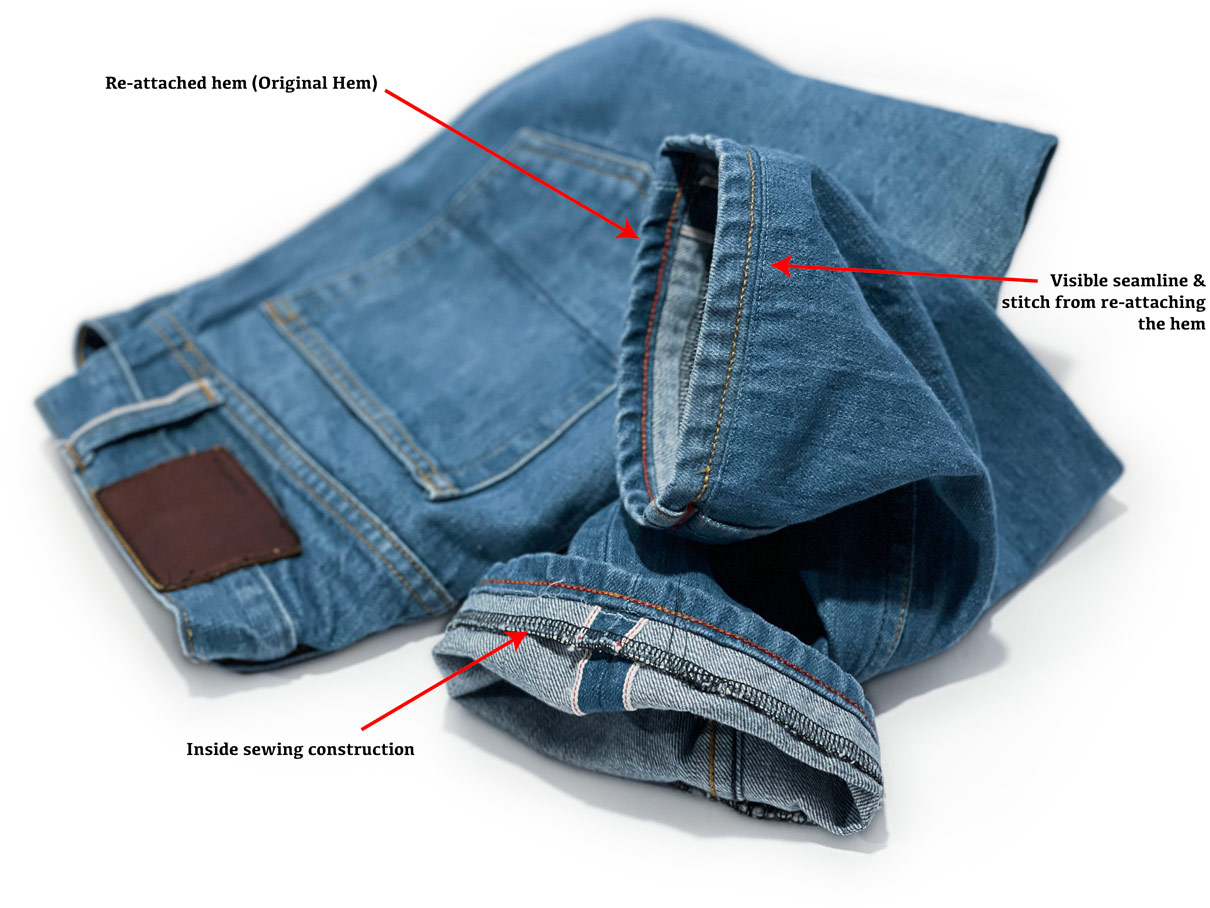
Photo explains what is an original hem alteration on jeans
An Original Hem alteration on a pair of Gustin selvedge jeans notes the construction details of one of the many techniques. Each method has a visible seamline from re-attaching the hem.

This method of hemming is preferred among sewers with home and common-duty industrial machines. It allows them to dodge sewing through multiple layers of denim fabric required in traditional jeans hemming. Besides preserving tatter hem edges, some techniques preserve the manufacturer’s stitching above the hem, which is too thick for home machines, and usually not stocked at most dressmakers and tailoring shops.

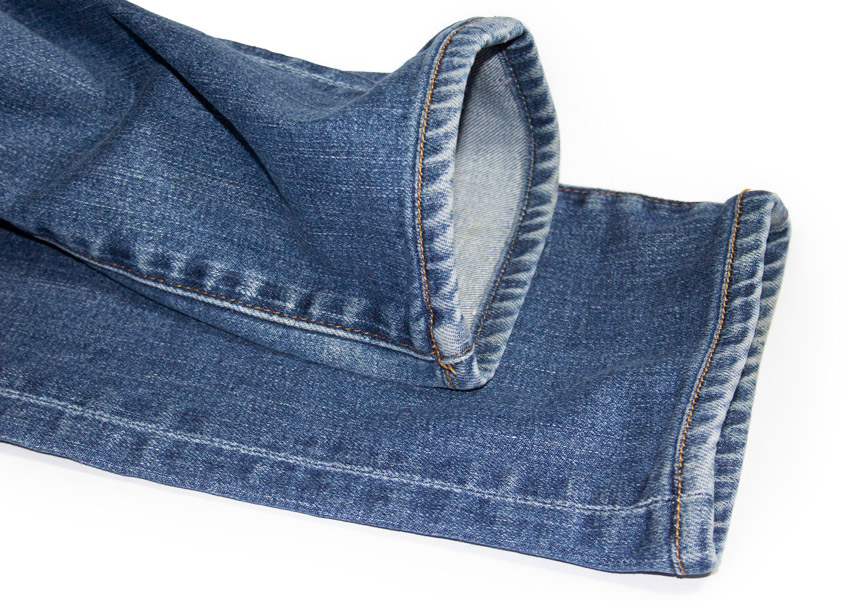
Another method of Original Hem alteration has a clean inside construction but is stiff and uncomfortable around the ankles

The alteration method above has a clean inside construction but its construction style causes the hem to be stiff and ring-shaped. The customer who sent this pair in removal and re-hemming complained it was annoying to wear.

Denim enthusiasts and those generally knowledgable about jeans avoid original hem alterations. It is an alteration procedure typically advocated by DIY diehards and non-denim experts because it is generally easier for their equipment to handle. The tailor’s selling point of the process is the preservation of the store-bought hem. Void in the conversation is the annoying inside bulk around the ankles, goofy seamline, or stiff ring-like shape of the cleaner sewn version of the alteration โ€“ and the fact that the aged look of the hem will naturally come back through frequent washing and/or wear.

Denim jeans and like-constructed pants are predominantly sewn with chain stitching at the hem and heavy threads that can withstand harsh washing, not typical in other garments. However, even denim lovers more knowledgeable than the average mom about jeans and workwear can get talked into an original hem alteration. Either that or don’t ask the right questions in choosing a hemming service. Have a look at a few examples of jeans and pants sent to us in need of rescuing.

Iron Heart fans should be warned, that the photo below could be extremely upsetting.

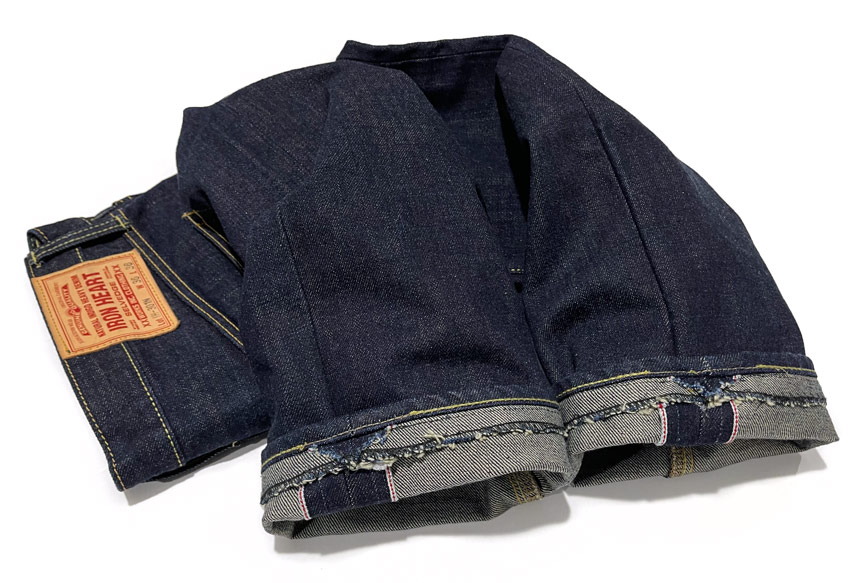
The photo shows a pair of Iron Heart jeans as a prime example of bad tailoring. The jeans were tapered from the outseams, destroying the selvedge, and then shortened with an original hem alteration.

This is a prime example of bad tailoring. These rather expensive and high-quality jeans were tapered from the outseams, destroying the selvedge. Not to go far enough, the tailor topped them top off with an original hem alteration. Here there is no reason to save an aged-looking hem edge. The obvious reason for using this hemming technique is the lack of equipment able to sew through the heavy denim typically found in Iron Hearts jeans.

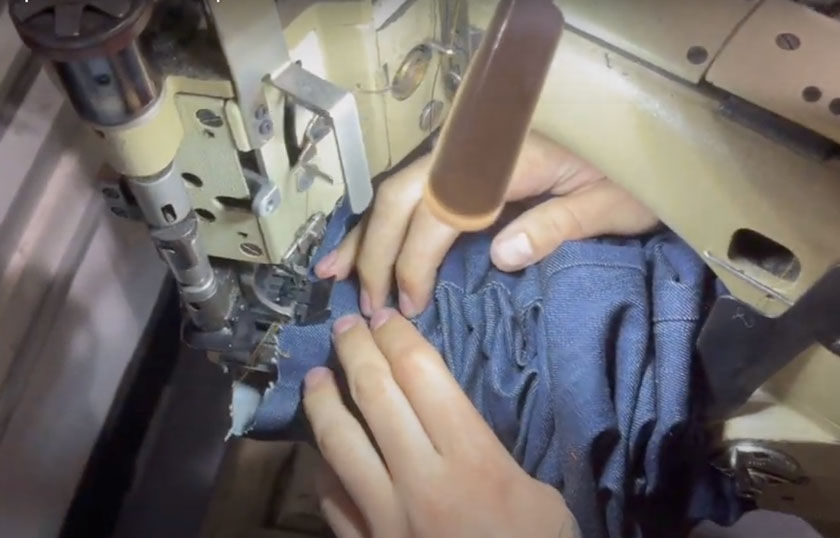
Tapering jeans sewing on a Union Special 35800 feed-off-the-arm machinen

The Union Special, it’s like a plane, it flies itself!

After tapering a pair of jeans with an overlocked inseam, Isreal the production manager, and tapering expert at WGC shows off his sewing skills, single-needle topstitching the inseam just 1/8-inch from the seam edge with his eyes closed. To quote Isreal, working on the Union Special feed off the arm machine “It’s like a plane, it flies itself!”

*”Our Secret Trick for Sewing a Perfect Inseam – with Eyes Closed!” (Union Special 35800 Feed-Off-The-Arm)*

*WATCH-

Bad DIY lockstitch hemming done by home sewing machine
Example of poor quality DIY lockstitch hemming done by home sewing machine.
/

Fixing Tailor’s & DIY Hemming Mistakes

We fix a lot of professional tailor shops and DIY home sewing machine hemming jobs. People learn the hard way that home sewing machines aren’t up to standard when working with denim and then send jeans to us for re-hemming. The thick seamlines are just too much for most domestic machines, so we often find thin broken needles stuck inside of hems.

Others discover that the difference between the quality of denim alterations from a suit tailor or local cleaners, and us is like night and day. That’s because the heavyweight fabric requires specialized machines and the workmanship required for denim is worlds apart from suits, fine trousers, dresses, and style of garments commonly worked on at most tailoring shops.

Lockstitch sewing on selvedge denim jeans hem
Lockstitch hemming is often what you get at Cleaners or Professional Tailoring shops.

Hems are commonly sewn with chain stitching at jeans factories. Most professional tailors will try to hem jeans on single-needle lockstitch machines, but they often can’t handle the thick fabric or seams. Again, home sewing machines arenโ€™t nearly capable.

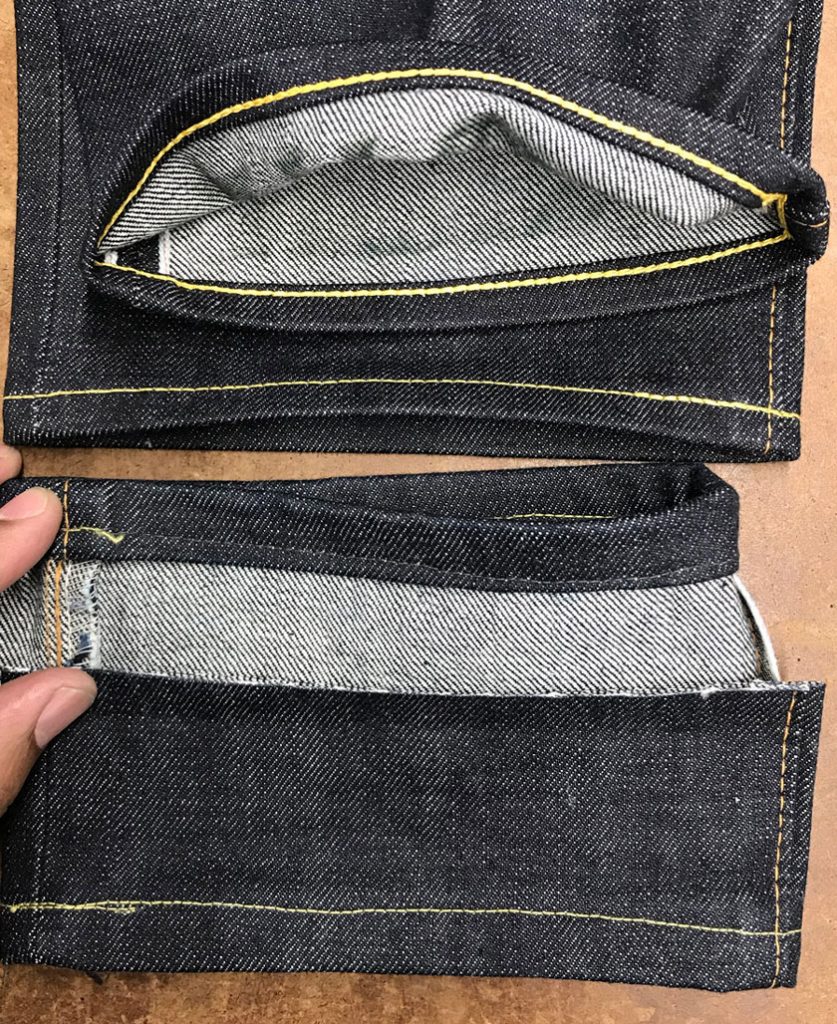
Chainstitch vs lockstitch hemming
Example of chainstitch vs lockstitch hemming compared. Chain stitching at the top of the photo, lockstitching at the bottom.

When it comes to stitching sizes, professional tailors will use threads that are a little heavier than the small thread sizes which must be used in domestic machines. But still, they usually don’t stock the thicker thread sizes commonly used with denim. The difference is plain to see when it comes to jeans- have them professionally altered by a denim specialist.

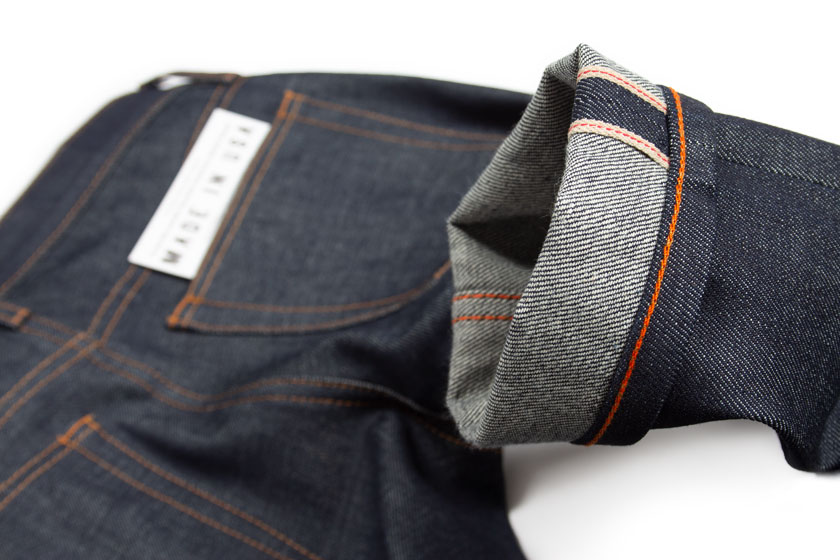
Hem of American-made raw denim selvedge jeans with orange chain stitch hemming shows what is aw denim, selvedge on jeans and chain stitching.
/

What’s the difference between raw denim and selvedge denim?

Here is everything you need to know without going into great detail about raw denim’s history or production. Raw denim fabric must first be understood in order to understand what raw jeans are.


Raw denim is simply denim fabric that has not been washed, dyed, soaked, or otherwise exposed to water.


Raw denim is simply denim that has not been washed, colored, soaked, or otherwise exposed to water after the weaving process. What makes denim “raw” has nothing to do with its color, weight, maker, dye, or the fact that it is selvedge or not.

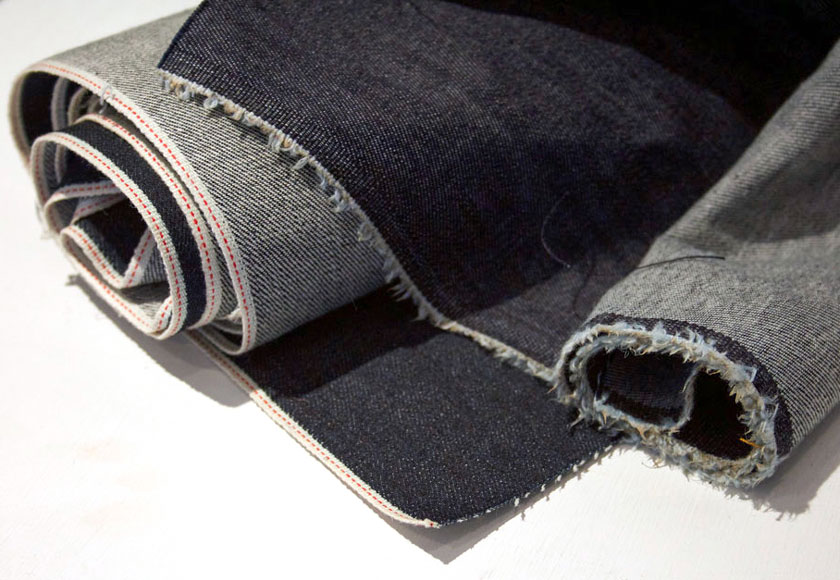
Raw denim is also called dry or hard denim, but it shouldn’t be confused with selvedge denim, which it often is. In the image below, you can see examples of the two different types of raw denim fabric used to make denim clothing. The most common type of denim among denim enthusiasts is selvedge, which refers to the weaving process of the fabric. It has clean-self finished edges or โ€œself-edgeโ€ which are used in finished garments by cutting selected pattern parts to the edge of the fabric. Wide goods or non-selvedge denim (pictured in the foreground) is woven with frayed edges which are discarded after cutting.

A close-up of selvedge and ordinary raw denim fabric to highlight the difference.
A close-up of selvedge (redline edge) and ordinary raw denim fabric to highlight the difference.

Is selvedge better quality denim?

Don’t be fooled by the name selvedge into believing it’s better denim. Quality standards, like other items, will vary depending on the provider. Both selvedge and non-selvedge denims are manufactured in varying grades. Frequently, mass producers of low-cost jeans use suppliers who are not known for producing high-quality denim. Do your homework since some mass-market brands will leverage the cache of mills recognized for creating premium denim to make cheap denim that looks the part.

Why is selvedge denim more expensive?


For fabric mills, weaving selvedge denim is more expensive. For brands, the cost of manufacturing garments produced with selvedge denim is higher. As a result, selvedge denim products typically sell at higher costs within a brand’s style assortment.


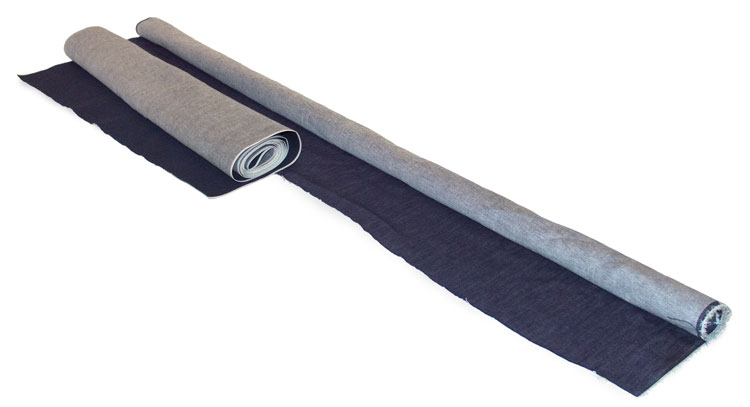
Rolls of selvedge denim and non-selvedge regular raw denim are side by side to compare raw denim vs selvedge.

Within a brand’s style range, selvedge denim jeans are more likely to be more expensive than non-selvedge models: To begin, unlike non-selvedge denim, which can range from 57″ to 64″ wide, selvedge denim is narrower, ranging from 28″ to 34″ in width. This means that a pair of selvedge jeans may require roughly double the amount of fabric as a regular pair of jeans. The pricing of the fabric is the second factor to consider. Selvedge costs a few dollars extra per yard (depending on the supplier) because it is typically woven on older, slower looms that create fabric with a high rate of flaws, whereas modern looms make wider (non-selvedge) denim with fewer faults at faster speeds.

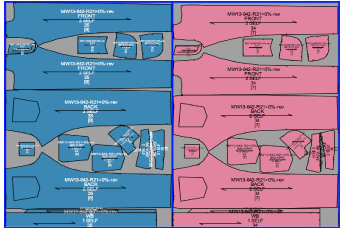
The images below show “Markers” for jeans. Markers are patterns for each size range that are printed on paper and used by the cutter to trace the cut on the fabric. The pattern pieces on the Markers are arranged to minimize fabric waste. Selvedge Markers are shown in the top image, and non-selvedge Markers are shown in the bottom image. This example shows two pairs of jeans cut on the narrower selvedge denim would require nearly 6 yards of fabric, while two of the same sizes cut on the wider non-selvedge would use about 2 1/2 yards of fabric.

A Mini Marker for cutting two sizes of selvedge jeans on narrow selvedge denim fabric
A Mini Marker for cutting two sizes of selvedge jeans
A Mini Marker for cutting two sizes of non-selvedge regular denim jeans on wide goods denim fabric.
A Mini Marker for cutting two sizes of non-selvedge regular denim jeans

1 3 4 5 6 7