
Maurice Malone

If you know denim...

African American denim designer and fashion brands owner Maurice Malone speaking to students in denim class at Parson School of Design
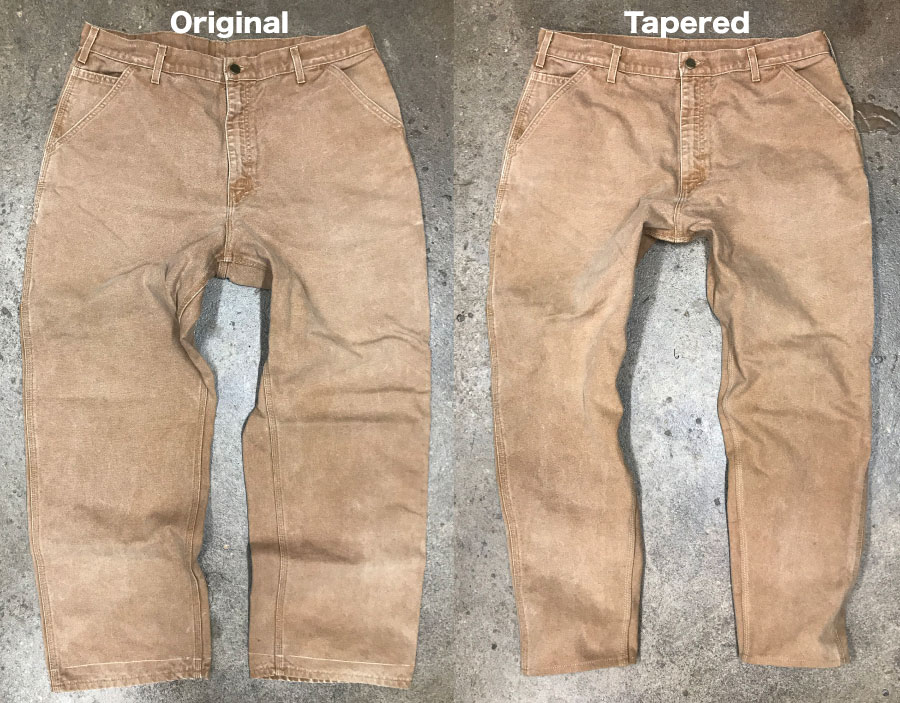
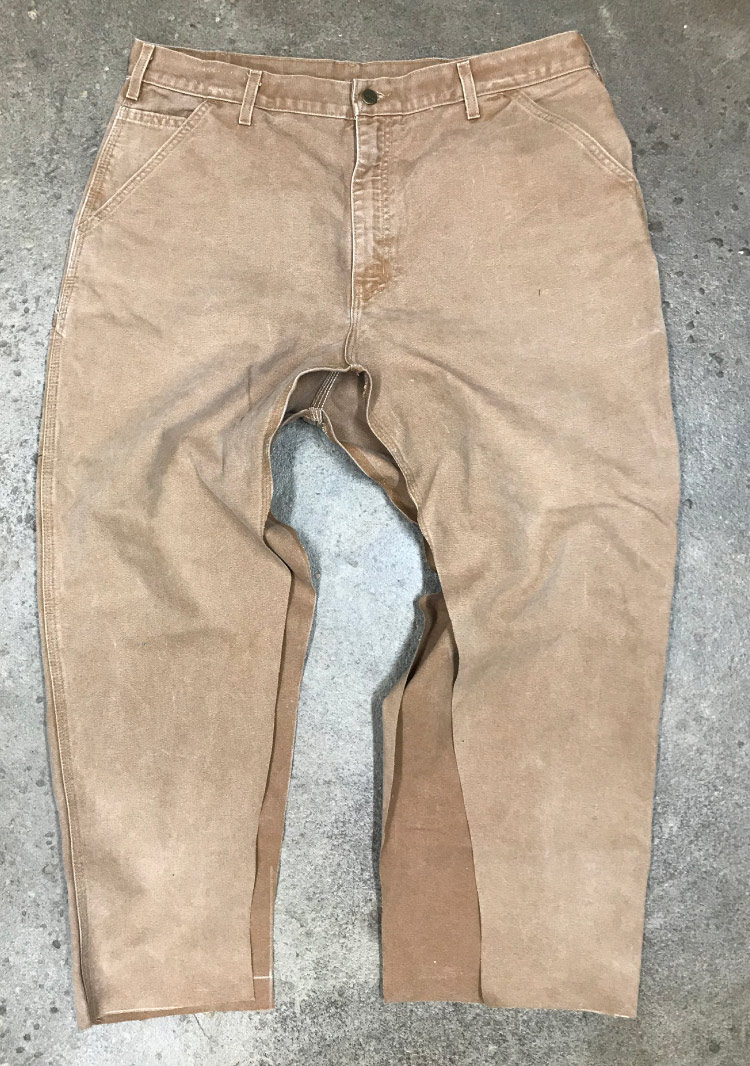
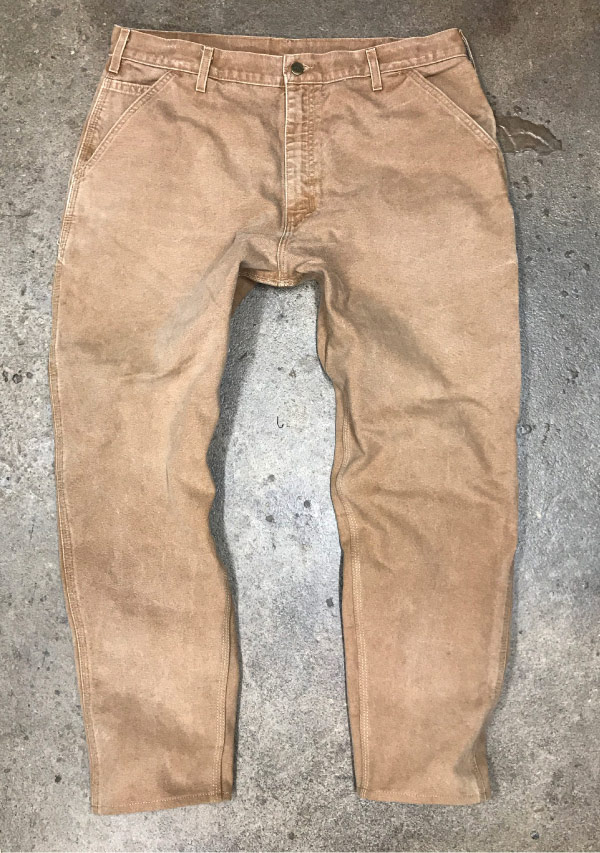
3-needle chain stitched tapering of Carhartt work pants before and after photos
/

Tapering Carhartt & other work pants

You love work pants but wish they came with a modern fit for casual wear. Here we explain the step-by-step process that went into tapering a pair of triple-needle flat-felled chain-stitched inseam Carhartt carpenter pants from a 20-inch wide leg, down to a 15-inch opening.

Itโ€™s a job that not many tailors or alterations services do because of the skill and equipment needed. As a denim factory with all the heavy-duty machinery required to deal with triple-needle stitching at both the out-seam and inseam of work pants, one can argue our added enhancements look better than the original manufacturing.

The tapering process

Step – 1: Inseam length

In the above before & after photo, you can note the lines drawn above the hem of the pants. It marks the requested inseam length. 1-inch is added to account for the two 1/2-inch folds of the hem.

The hem of pants are cut 1-inch longer than the request inseam length

From the start, we cut the inseam to match the customer’s requested inseam length. However, the inseam always grows during the sewing process when we put the inseam back together. The fabric stretches while being pulled through the flat-felled sewing machine. Pressing at the end of sewing also causes the fabric fibers to flatten and grow. We leave the length as-is, which is usually longer, anticipating the pants to relax back into place after wash and wear.

Step – 2: Undo the inseam

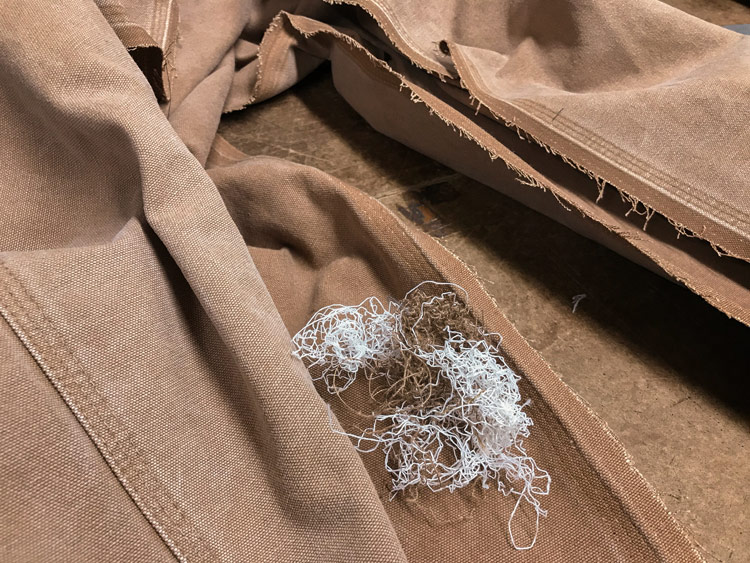
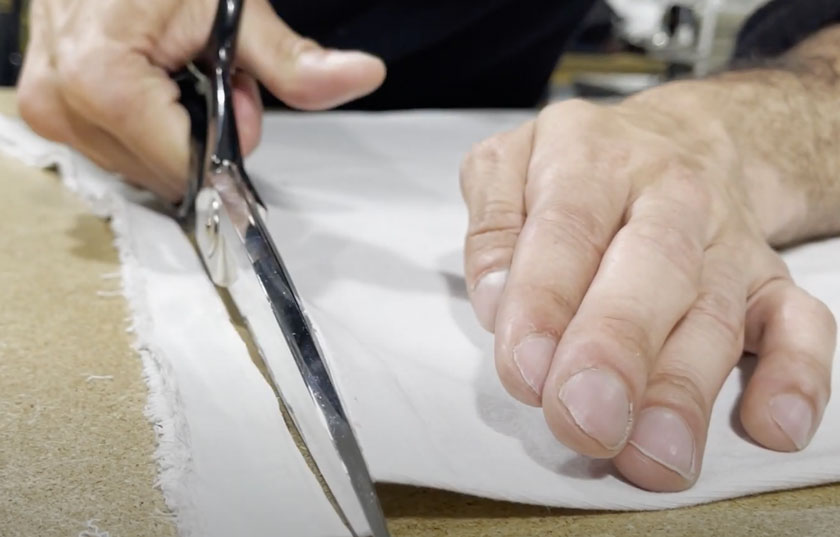
The requested inseam for this pant was 28-inches. After cutting the pants down to the new length, plus 1-inch, we pull the chain stitching apart at the inseam. This is a fairly quick process. For factories, the chain stitch is the strongest, and most effortless to pull apart in cases when re-sewing is needed.

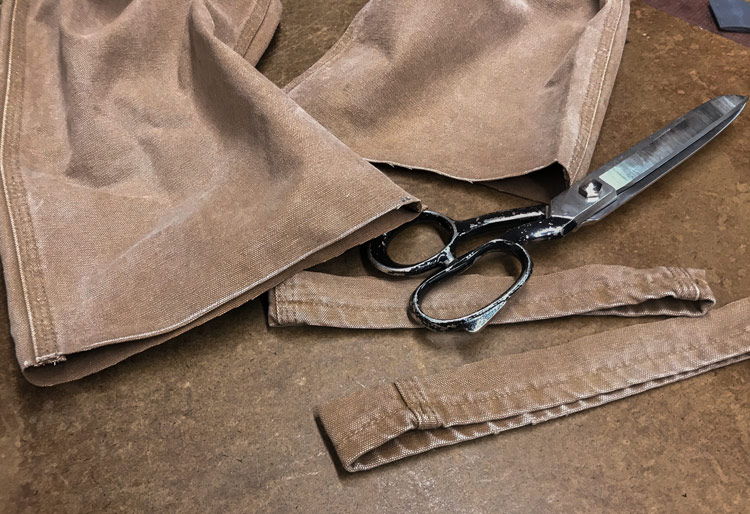
The 3-needle inseam stitching of carpenter pants is taken apart

Step – 3: Re-Draft leg shape

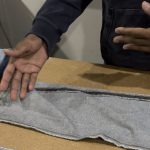
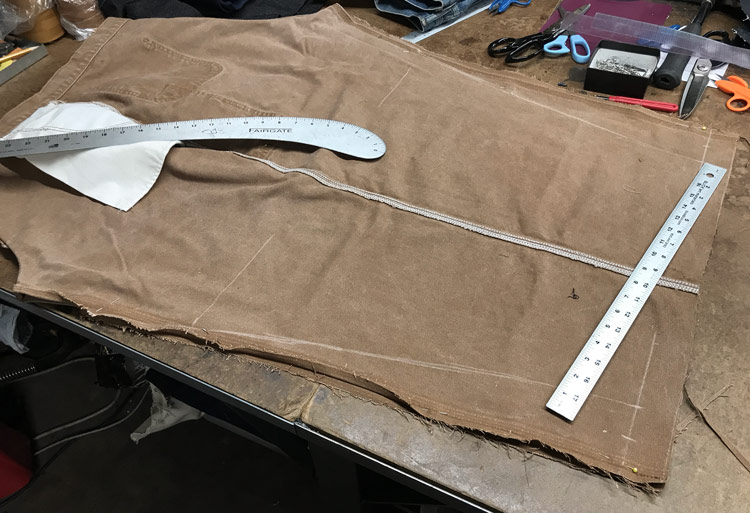
The pants are opened and placed on the table to re-draft the leg shape. The leg of this Carhartt carpenter initially measured 20-inches in total circumference. The customer requested to bring it down to 15-inches.

Carhartt work pants are opened to re-draft the leg shape for tapering.

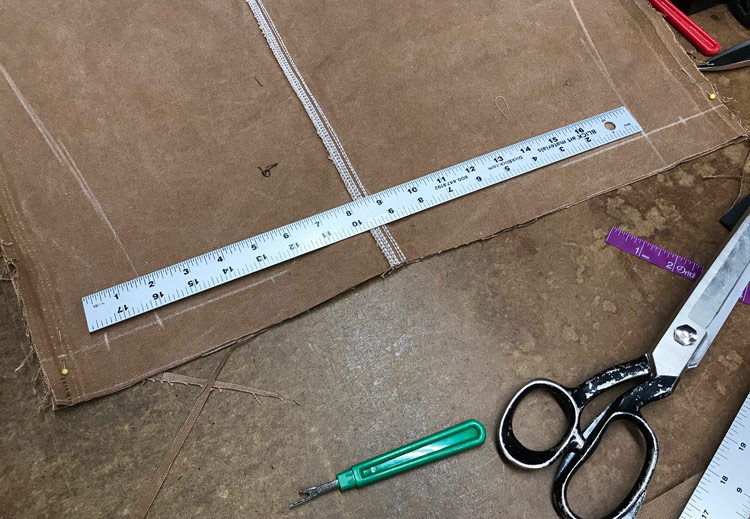
Below, note the leg opening measurement is 16 1/8 inches. 1 1/8-inches is added for seam allowance. In the photo above, markings for the knee can be seen. It highlights the area where we make the turn towards the crotch.

Close-up of leg opening measuring shows how to taper the leg of the pants.

Step – 4: Sewing

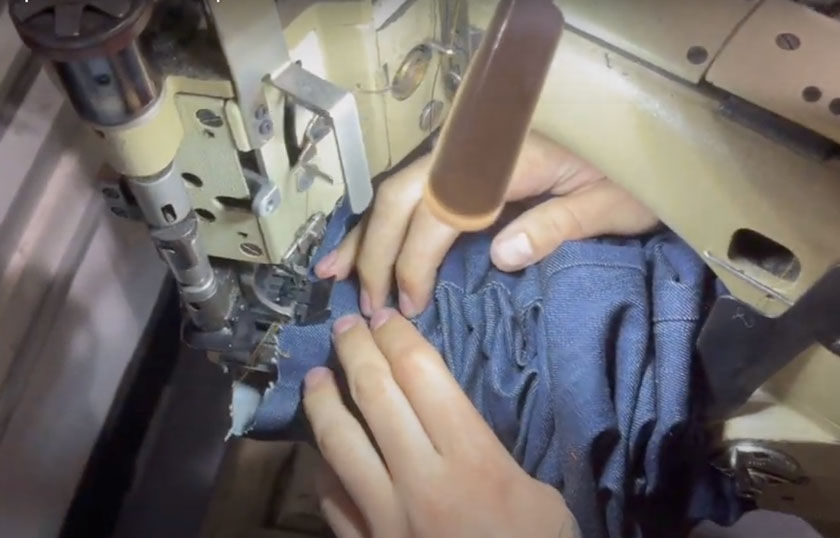
Finally, using the three-needle flat-felled sewing machine, the inseam is closed, and the hem is chain-stitched with a Union Special sewing machine. Last, the garment is pressed and packed for shipping back to the customer.

Under our alterations services menu, we offer triple-needle taperingDouble-needle, and single-needle tapering services. We charge slightly more for triple-needle work because of the machine set-up and change-over.

Bad DIY lockstitch hemming done by home sewing machine
Example of poor quality DIY lockstitch hemming done by home sewing machine.
/

Fixing Tailor’s & DIY Hemming Mistakes

We fix a lot of professional tailor shops and DIY home sewing machine hemming jobs. People learn the hard way that home sewing machines aren’t up to standard when working with denim and then send jeans to us for re-hemming. The thick seamlines are just too much for most domestic machines, so we often find thin broken needles stuck inside of hems.

Others discover that the difference between the quality of denim alterations from a suit tailor or local cleaners, and us is like night and day. That’s because the heavyweight fabric requires specialized machines and the workmanship required for denim is worlds apart from suits, fine trousers, dresses, and style of garments commonly worked on at most tailoring shops.

Lockstitch sewing on selvedge denim jeans hem
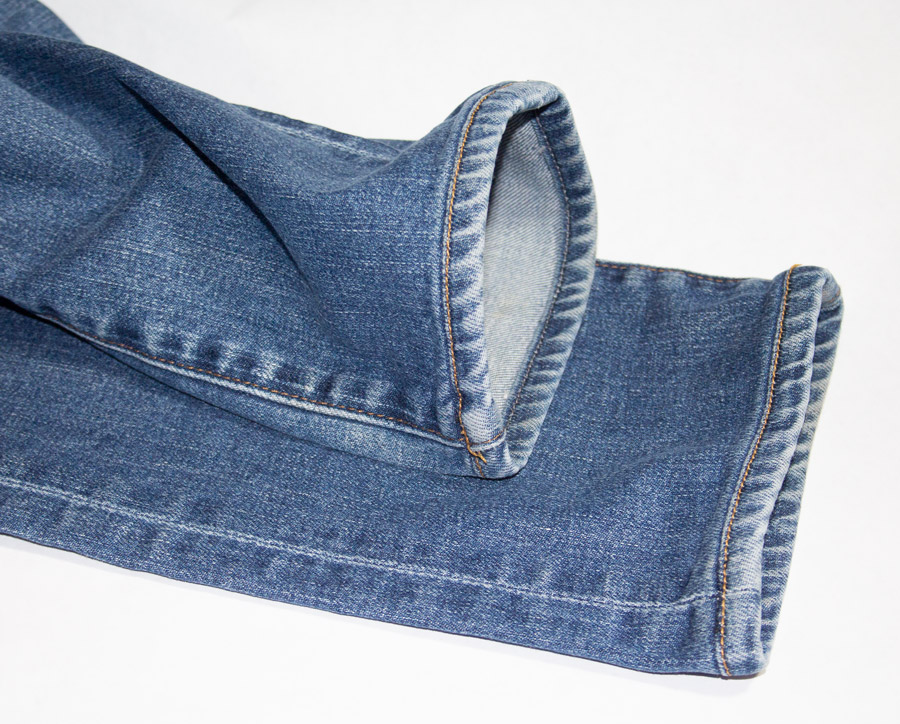
Lockstitch hemming is often what you get at Cleaners or Professional Tailoring shops.

Hems are commonly sewn with chain stitching at jeans factories. Most professional tailors will try to hem jeans on single-needle lockstitch machines, but they often can’t handle the thick fabric or seams. Again, home sewing machines arenโ€™t nearly capable.

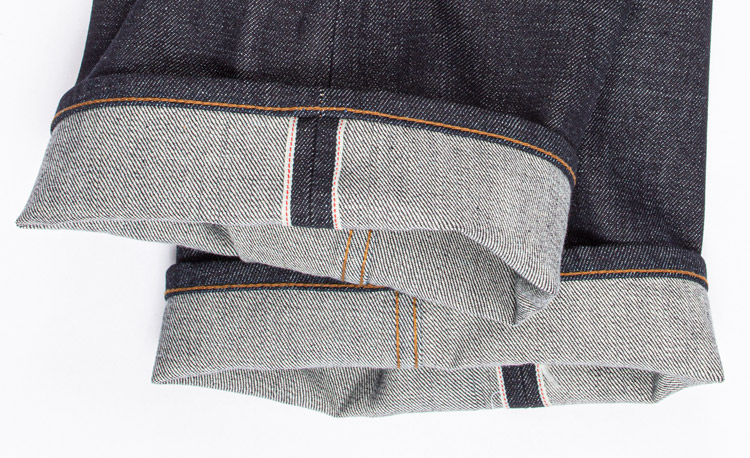
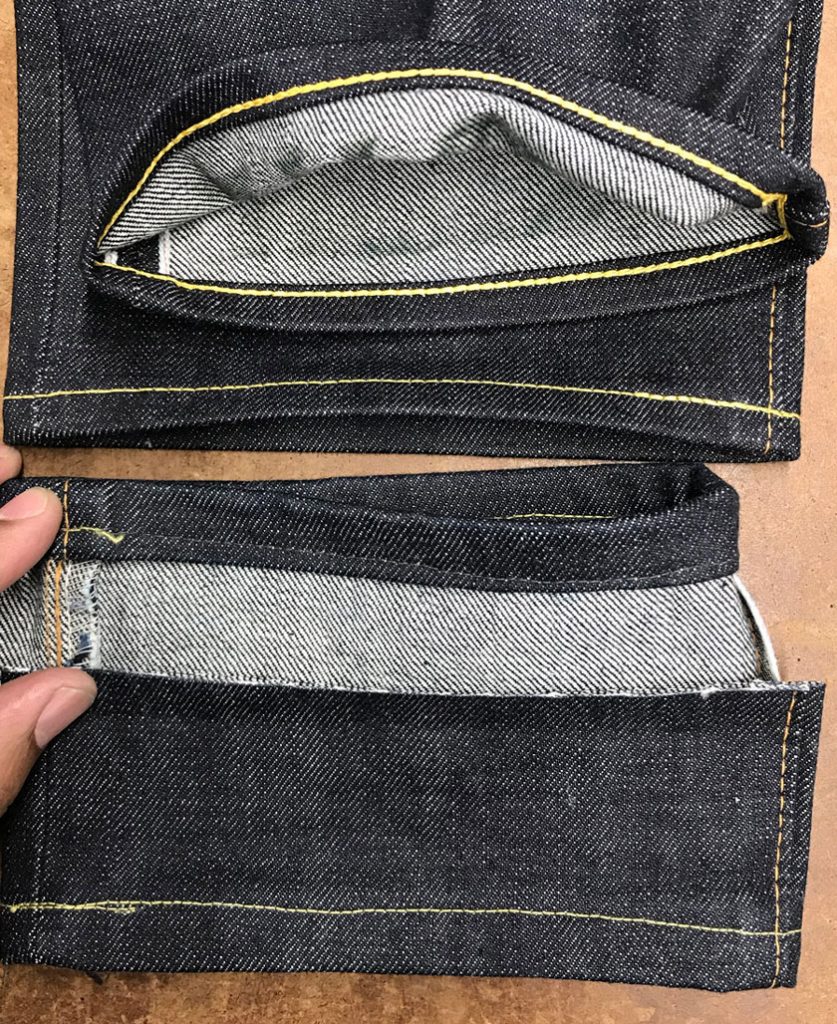
Chainstitch vs lockstitch hemming
Example of chainstitch vs lockstitch hemming compared. Chain stitching at the top of the photo, lockstitching at the bottom.

When it comes to stitching sizes, professional tailors will use threads that are a little heavier than the small thread sizes which must be used in domestic machines. But still, they usually don’t stock the thicker thread sizes commonly used with denim. The difference is plain to see when it comes to jeans- have them professionally altered by a denim specialist.

Guide showing the key hemming and tapering points in jeans
/

A detailed guide for hemming jeans and tapering them to perfection

How to taper and hem a size 30x36 jean to size 30x28

When smaller and mid-sized denim brands manufacture jeans, they try to cover a wide range of customers by producing jeans as long as 34 to 36 inches. For those who have to shorten jeans or pants offered by most better producers, we would like to share this example of how to hem a pair of jeans and achieve the original optimal fit through the leg shape.

Graphic shows hemming jeans size 30x34 to 30x28 with added tapering
  • Aย –ย The leg openingย is also knownย as theย hem. The inseam of thisย jeanย originally measured 34-inches long.
  • Bย –ย Hemmingย is shortening the inseam length.ย These jeans have been hemmedย to measure 28-inchesย in length. The leg opening appears slightly smaller at this point in the photo, however, with addedย tapering, the hem has been trimmedย to the original size. It is only because the width of a tapered pant gets larger the higher up you go. The raised leg opening looks smaller at this point as compared with the original width.
  • Cย –ย This is the original knee position of the uncut 34-inseam leg (12 ยฝย โ€ย below the crotch). The knee is where the leg circumference begins enlargement into the thigh. Without raising the knee position on shortened jeans, the area around the knee will be bigger than it was originally designed.
  • Dย –ย By tapering, we trimmed the denim slightly to match the original measurements at the lower leg and raised the knee placement so the leg keeps its original contoured shape.ย The new knee is locatedย 10 ยฝย โ€ย below the crotch. Without raising the knee, you can see how much extra fabric would remain if hemming alone.

Unless you are up for laying out good money for a pair of custom-made jeans, it is likely a brand that offers multiple inseam options will simply make its standard size and cut the length down before shipping, without consideration of moving the knee position. Like most brands, if you order hemming without additional tapering, we would do the same.

Letโ€™s say a brand offers pants or jeans sizes 30×28, 30×29, 30×30, and 30×31. Thatโ€™s four different inseams within a single waist size. To have the proper knee location on each and every size would require four different sets of patterns. One pattern per waist size, per each inseam length. It is unlikely a brand would do so unless they are a mass producer. Now that you have an understanding of why it is so difficult to find pants off-the-shelf in a multitude of inseam sizes and the behind-the-curtain factors associated with those who may, letโ€™s get to the workaround.

Our suggestion is merely hemming jeans and adding tapering. For this is a simple alteration where we take apart the legs, make the adjustments, then put them back together. If constructed with a lap or flat-felled seam with double stitch lines, we only need to take apart the inseam. If the jeans are constructed with a serger and single-needle stitch line at the inseam, we start by removing the inseam’s topstitching. Next, we draft the new shape at the inseam and sew it back together following the original thread colors. The outseam is never touched.

Constructions details that help explain how to hem jeans

Before explaining how to hem jeans with added tapering, we will first explain the two types of construction found in most jeans. Inseam design is especially important when it comes to tapering but it does not matter for hemming.

  • Eย – Denim and work clothing most oftenย are producedย with aย flat-felled seam. It has a double-needle chain stitch (sometimes 3-needles in work pants) at the inseam for strength and durability. It wouldย be surprisingย if your local cleaners, tailor, or even most denim specialists have the machine required to sew this seam. It is mainly found in factories and small-batch jeans makers. Without the need to open the outseam, it sews the topstitching and closes the seam in a single pass.
  • Fย ย โ€“ย ย Pictured in both images areย selvedge (selvage)ย outseams. The vast amount of jeans sold will not be produced in selvedge denim. Top-end denim brands will offer selvedge in their line-ups. Some only offer selvedge. Selvedge does notย factorย in theย quality of the fabric.ย When jeans are not produced in selvedge denim, the outseams can also be constructedย with anย overlockedย edge and pressed open. Low-end denim producers routinely close theย outseamsย with a closed overlock for speed.
  • Gย ย โ€“ย The hem or leg opening on jeansย is commonly sewnย with chain stitching in better denim. Low-end makers will frequently use a standard lock-stitch. Home sewers and fine tailors often run into difficulty working with the hem using sewing machines not suitable for sewing through multiple layers of denim fabric.
  • Hย – Makers of very heavy jeans will construct them with aย single-needle topstitched inseam to avoid the difficulties of folding and sewing through multiple layers of thick denim. On womenโ€™s and skinny jeans, single-needle topstitch construction is also most often used for comfort and flexibility. Lower-priced jeans also prefer the serger seam for ease and speed.

The heavy lifting in the leg shape of jeans is at the inseam. Selvedge and a good deal of non-selvedge jeans have a straight outseam from the hem-to-hip curve. Unless the jeans have a flared or bootcut, tapering should be done at the inseam. Tapering selvedge from the outseam would be unforgivable.

Even though outseam tapering alterations and regular lockstitch stitched hems are simply amateur, there are commercially produced YouTube videos where one of the worldโ€™s biggest and most popular denim brands gets it wrong. Perhaps because it’s faster, more convenient or they donโ€™t have the right equipment and skilled operators in their stores for factory quality alterations. Good advice before letting anyone begin work on your jeans ยญยญ โ€“ ask how they intend to do it.

For more information on hemming and tapering, check out our many other articles and alteration services.
How much raw denim jeans grow or shrink after washing and wearing explained with measurement changes displayed over the jeans waistband, rise, hips and thighs.
/

A look at raw denim jeans after wash & wear

We analyze our Slim Standard Grand Street jeans after washing and wearing them to explore how the fit of raw denim jeans can vary over time. The style before the wash feels starchy and crisp. It was produced in a mid-weight, 11.5-ounce, American-made Cone Denim White Oak non-selvedge denim.

Williamsburg Garment Company's new raw denim jeans compared to broken-in worn jeans

We do a lot of denim alterations, not just on our jeans but also on those from numerous other brands. The bottom line is that we get to see a lot of denim, which is a plus. They arrive with us new, slightly used, well-broken-in, or terribly damaged and devastated.

In the case of Williamsburg jeans, this enables us to contrast various levels of our used denim with those of the same style that are brand-new, off-the-rack. These jeans were brought in for button repair work. It was a fantastic pair to study because they hadn’t had any hemming or other adjustments done that would have made them out of the original specifications.

The measurements between the new and the older pairs of jeans are shown here. Because of the yarn colors, fabric texture, softness, and lack of oil in the fabric, we know this pair has been washed at some point throughout its history, even if we didn’t inquire. The signs of stretching are prevalent in locations that experience typical stress, so we know the jeans were worn after being washed.

Measurements differences between new and worn raw denim jeans
The measurements indicate the changes between brand-new and worn raw denim jeans.

You should be aware that when it comes to raw denim, each fabric that makes up the product may have varying rates of shrinkage or growth. This is true whether you own a pair of raw jeans from another manufacturer or even a different model of Williamsburg jeans. When soaked in water, some denim actually expands in one direction rather than contracting. Others may have little or significant stretching.

Finally, size is important. In the same fabric, a 1/4 inch increase on size 30 jeans could translate to a 3/8 to 1/2 inch increase on size 40 jeans. This is due to the fact that larger size changes are being felt over greater distances.

For more information, or to review spec changes in other styles, check out past articles.

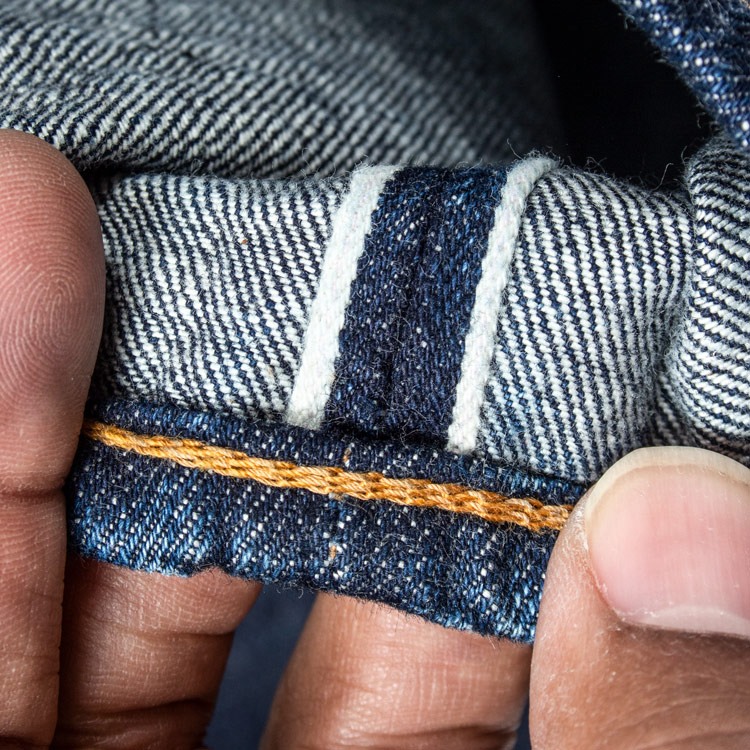
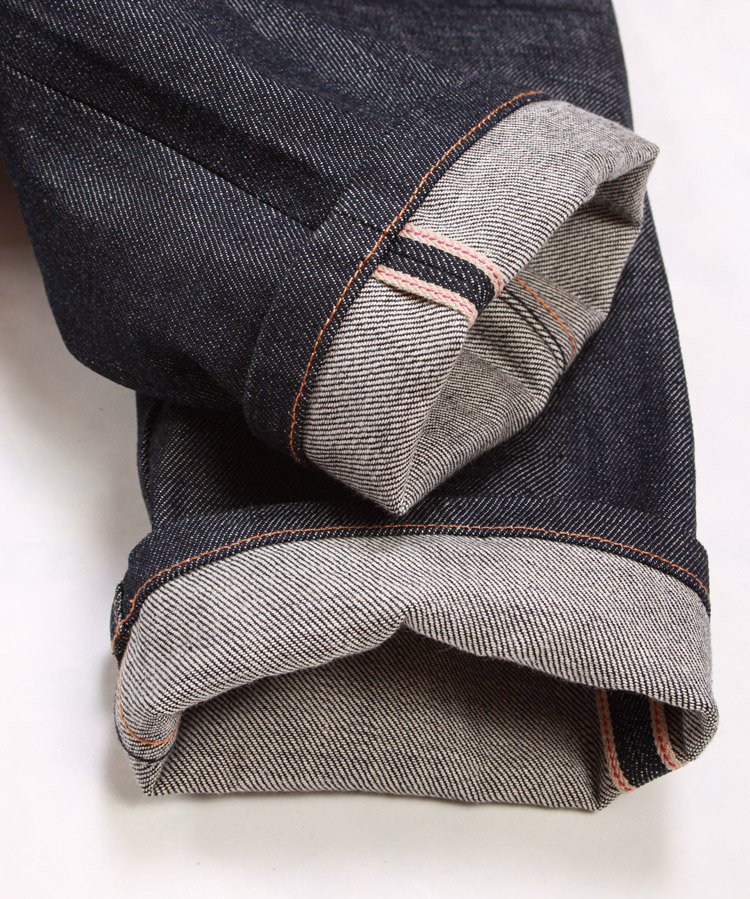
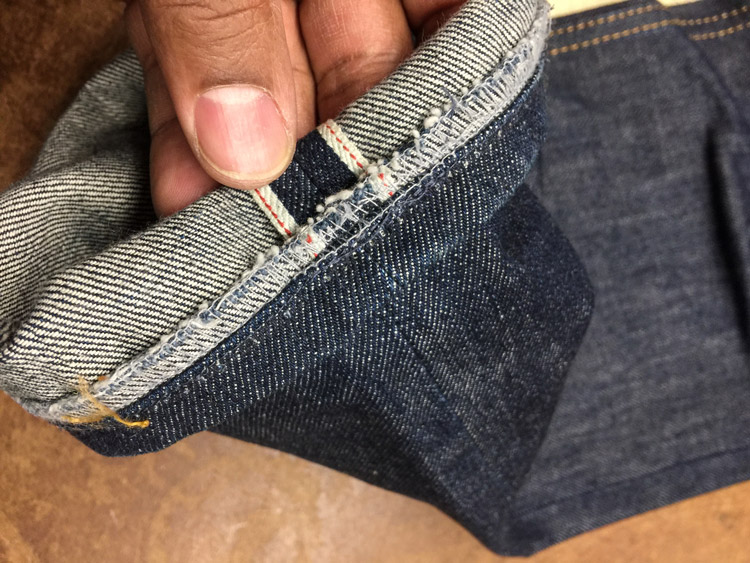
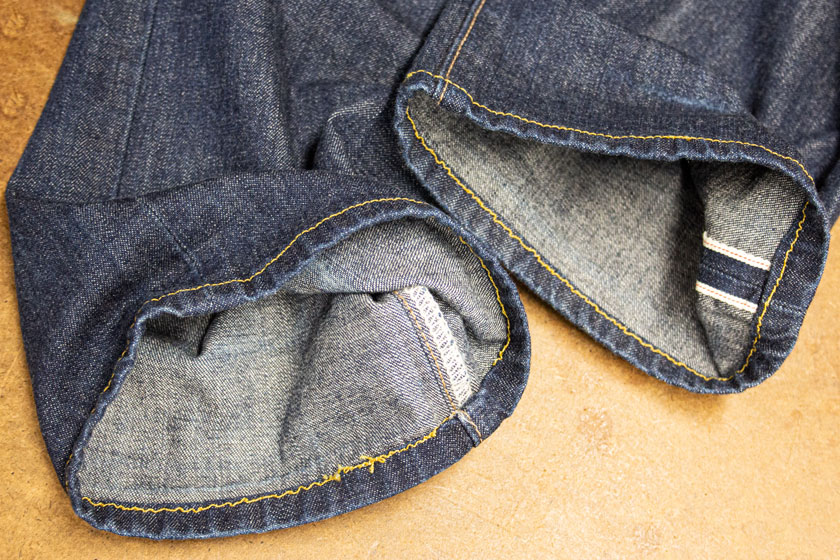
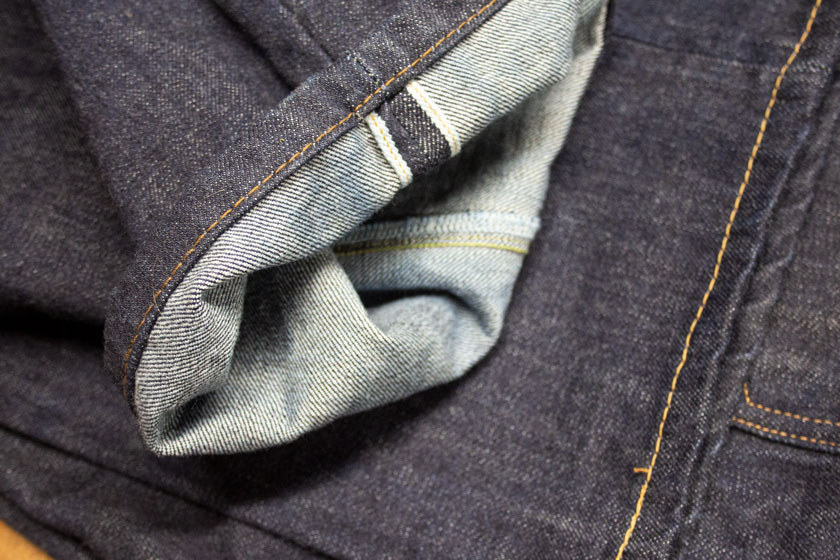
Hem of American-made raw denim selvedge jeans with orange chain stitch hemming shows what is aw denim, selvedge on jeans and chain stitching.
/

What’s the difference between raw denim and selvedge denim?

Here is everything you need to know without going into great detail about raw denim’s history or production. Raw denim fabric must first be understood in order to understand what raw jeans are.


Raw denim is simply denim fabric that has not been washed, dyed, soaked, or otherwise exposed to water.


Raw denim is simply denim that has not been washed, colored, soaked, or otherwise exposed to water after the weaving process. What makes denim “raw” has nothing to do with its color, weight, maker, dye, or the fact that it is selvedge or not.

Raw denim is also called dry or hard denim, but it shouldn’t be confused with selvedge denim, which it often is. In the image below, you can see examples of the two different types of raw denim fabric used to make denim clothing. The most common type of denim among denim enthusiasts is selvedge, which refers to the weaving process of the fabric. It has clean-self finished edges or โ€œself-edgeโ€ which are used in finished garments by cutting selected pattern parts to the edge of the fabric. Wide goods or non-selvedge denim (pictured in the foreground) is woven with frayed edges which are discarded after cutting.

A close-up of selvedge and ordinary raw denim fabric to highlight the difference.
A close-up of selvedge (redline edge) and ordinary raw denim fabric to highlight the difference.

Is selvedge better quality denim?

Don’t be fooled by the name selvedge into believing it’s better denim. Quality standards, like other items, will vary depending on the provider. Both selvedge and non-selvedge denims are manufactured in varying grades. Frequently, mass producers of low-cost jeans use suppliers who are not known for producing high-quality denim. Do your homework since some mass-market brands will leverage the cache of mills recognized for creating premium denim to make cheap denim that looks the part.

Why is selvedge denim more expensive?


For fabric mills, weaving selvedge denim is more expensive. For brands, the cost of manufacturing garments produced with selvedge denim is higher. As a result, selvedge denim products typically sell at higher costs within a brand’s style assortment.


Rolls of selvedge denim and non-selvedge regular raw denim are side by side to compare raw denim vs selvedge.

Within a brand’s style range, selvedge denim jeans are more likely to be more expensive than non-selvedge models: To begin, unlike non-selvedge denim, which can range from 57″ to 64″ wide, selvedge denim is narrower, ranging from 28″ to 34″ in width. This means that a pair of selvedge jeans may require roughly double the amount of fabric as a regular pair of jeans. The pricing of the fabric is the second factor to consider. Selvedge costs a few dollars extra per yard (depending on the supplier) because it is typically woven on older, slower looms that create fabric with a high rate of flaws, whereas modern looms make wider (non-selvedge) denim with fewer faults at faster speeds.

The images below show “Markers” for jeans. Markers are patterns for each size range that are printed on paper and used by the cutter to trace the cut on the fabric. The pattern pieces on the Markers are arranged to minimize fabric waste. Selvedge Markers are shown in the top image, and non-selvedge Markers are shown in the bottom image. This example shows two pairs of jeans cut on the narrower selvedge denim would require nearly 6 yards of fabric, while two of the same sizes cut on the wider non-selvedge would use about 2 1/2 yards of fabric.

A Mini Marker for cutting two sizes of selvedge jeans on narrow selvedge denim fabric
A Mini Marker for cutting two sizes of selvedge jeans
A Mini Marker for cutting two sizes of non-selvedge regular denim jeans on wide goods denim fabric.
A Mini Marker for cutting two sizes of non-selvedge regular denim jeans

Cone Mills White Oak closes NC plant
Photo Credit: Bloomberg
/

The End of American Made Jeans – Cone Denim to close White Oak Plant

This is no fabrication. A few weeks ago, I woke from a nightmare having dreamt Cone Denim, our main supplier of denim fabric, closed its doors and people were buying up everything down to bare shelves at our retail store. However, that was just a dream. Our denim supplier has been producing quality denim for over 125 years and has the oldest denim mill in the United States of America. A shut-down of its famous White Oak Plant which produces its U.S.-made denim and is the last mill standing that makes selvage denim in the USA is very unlikely. Right?

The day before writing this, I saw a spike in sales and I thought, maybe it was due to the results of the articles being written, inspired by our press release a few days earlier. Later that night after work, my wife asked if I heard the news about Cone Mills White Oak Plant closing. I thought, clearly she was mistaken and I went online to check it out.

If you are not familiar with Cone Denim Mills, they have been Americaโ€™s leading supplier of high-quality denim fabrics to apparel brands since 1891. Nearly all of the most popular and successful small to mid-sized domestic jeans makers in the United States rely on Cone Denim as a key supplier. At Williamsburg Garment Company, about 90% of the denim we use is American-made Cone Denim. I stress the point that we use American-made denim because Cone branded denim is also manufactured in mills located in China and Mexico. I learned from dealing with import complications and extra costs, to walk into the Cone showroom or tradeshow booth and stress, only show me the new American-made fabrics.

After doing some research and contacting Cone Denim, I was shocked to learn that Cone was indeed planning to close its 112-year-old White Oak Plant in Greensboro, North Carolina, which produces all of the company’s American-made denim and employs nearly 200 people. Initially, I hoped this was one of those times when an announcement is made for the closing or end of something very dear to a fan group, like Jay-Zโ€™s Black Album. Closing announcements can sometimes be used to ignite sales, meanwhile re-organizing and re-opening is really what is planned.

I hoped and suspected something would be announced later like, deciding to downsize the White Oak Plant or move the production to a new smaller more optimized manufacturing facility. However, after remembering International Textile Group, Cone Denimโ€™s parent company was acquired via a Public-to-Private transaction in October 2016 by the investment firm Platinum Equity, I feared the worst, knowing the thinking behind money people. When it’s strictly about turning a profit, closing the least profitable parts of an operation, like U.S. manufacturing, to focus on the more profitable parts, like foreign manufacturing, is normal thinking.

This seems to be what may be happening as a rep at Cone Denim has informed me, โ€œultimately there will no longer be any denim (wide and selvage) produced in the USA after December 31, 2017. All denim operations will be focused out of Mexico and China.โ€

Are the days of buying American-made jeans manufactured in denim fabric made in the USA coming to an end?

I sat in the park later that day teary-eyed in unbelief. Thinking this canโ€™t be happening. Will 2018 be the last year to get true American-made jeans manufactured with denim made in the USA? Will the U.S.-made denim supply run out? Will American-made jeans be defined from that point on as jeans sewn in the USA of Mexican, Japanese or Chinese-produced fabrics?

Some 100 years plus of heritage could be wiped out by inventors looking to make profits with one-dimensional thinking. I believe it should be as simple as optimizing the business to succeed in the way business is done today. Not to look on the surface and say this is profitable and this is not, cut out the non-and least profitable. With something this important to the country, I believe you have to find a solution to make it work. It boils down to the old saying, where thereโ€™s a will, thereโ€™s a way. Too often, money-types come in and take the easy route – stripe everything down, repackage and sell it off for profit, often destroying a brand on their way out.

In this case, they would be ignoring years of heritage and stripping the growing economy of small to mid-sized brands like ours that rely on Cone White Oak denim. We do business in todayโ€™s economy. Small-batch, online, direct-to-consumer businesses that focus on making a better product. We helped to ignite the comeback of American-made products after the downturn in the economy and after bigger brands move production overseas for higher profits.

I love Cone Denim. However, Iโ€™ve always thought they were underachieving as a brand. Often, big companies are too slow to modernize in changing times or get stuck in a do-the-same-thing weโ€™ve always done strategy. Today, more than ever, you have to think outside the box and clearly define your strengths and weaknesses. Which does not mean cutting off your weaknesses to focus on your strengths. It means being clearly aware of what they are, so you can make both work for you.

Bottom line, any type of business where deep American tradition gives it great value around the world, which produces some of the best products in the world, backed by more than 100 years of heritage and has a highly respected brand name, should be profitable. If a business that has been based in the U.S. for over a century canโ€™t use those things to be successful. The size of a plant and order volumes may not be the problem. Looking into taking advantage of the companyโ€™s strengths could help.

Most hard-core denim heads and industry folk are familiar with Cone’s brand. This is why, after the announcement of the plant closing, it took me a day to hear about it and we are one of the companyโ€™s customers and players in the denim industry. 

In my opinion, this story is so big it should be national news and running in CNNโ€™s hourly rotation with the headline โ€œIs this the end of American-made Denim?โ€ For this to be a top story at CNN, MSNBC, Fox, or the three major networks, does someone have to mention the connection with Wilbur L. Ross, Commerce Secretary of Trumpโ€™s MAGA billionaire posse? 

To complete the merger transaction, Platinum Equity acquired all of the debt and equity securities of ITG, previously owned by entities managed by W.L. Ross & Co. LLC and its affiliates. Not saying that the Commerce Secretary is at fault for the actions of who took over, but anytime an American Institution trades hands, you should have faith that the new tenant is going to take care of the place. And, if President Trump is truly trying to help American manufacturing, he and Mr. Ross need to get some billionaires together that will put this thing back in the hands of those who understand the importance of its American heritage and fix it.